
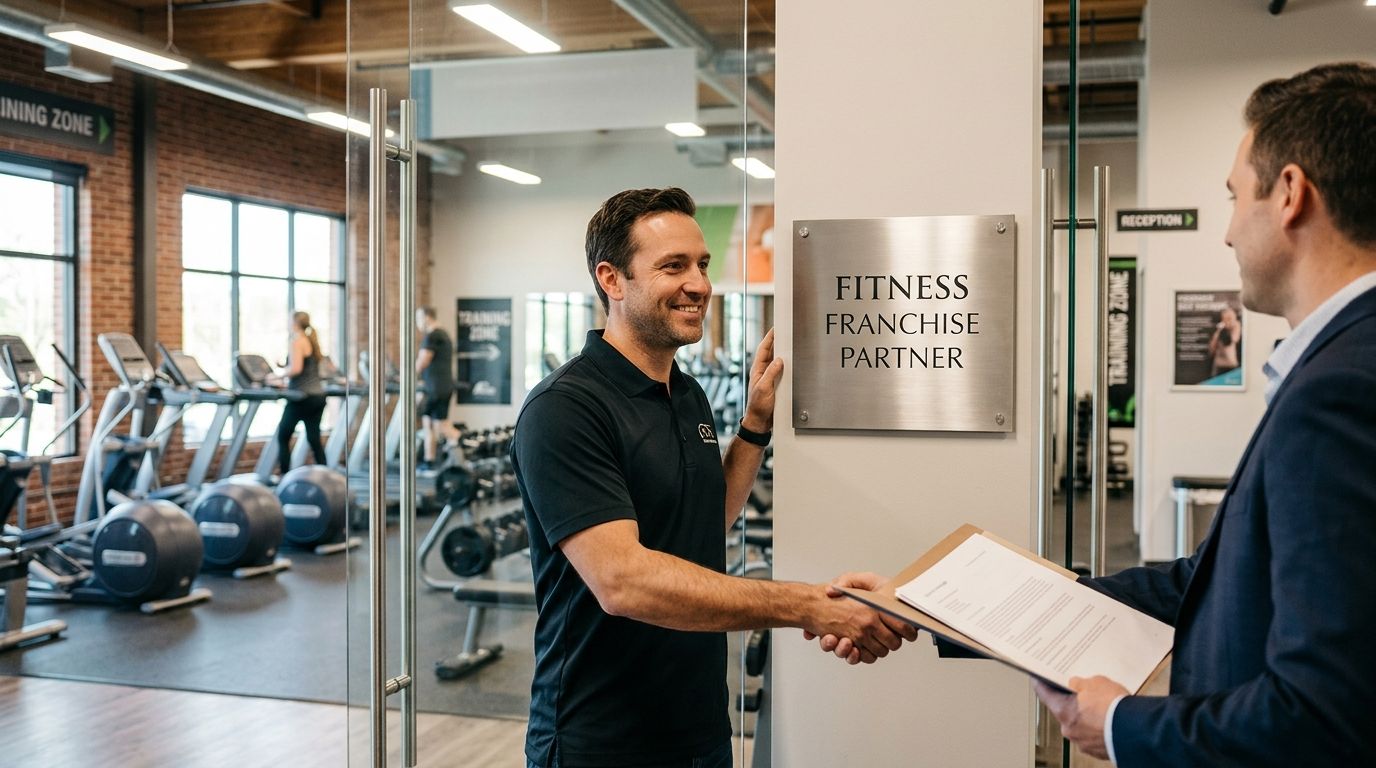
Independent gym owners going franchise convert an existing studio's membership base, staff, and lease into a franchised location under a proven brand system, with the goal of trading owner-operator hours for a repeatable, sellable business. The question isn't whether you can run a gym — you already do that. The question is whether your current unit economics justify giving up your name, absorbing a royalty rate, and rebuilding your marketing under someone else's playbook.
- Independent gym owners who convert to a franchise trade full control for a proven system, brand, and royalty structure.
- STRIDE Fitness franchise conversions fit owners with existing cardio and strength member bases, not first-time fitness operators.
- Audit trailing 12-month P&L and your worst month before applying — franchisors verify net worth and liquid capital at underwriting.
- Budget for a 60-90 day membership dip after a public rebrand instead of reacting to it after the fact.
- SBA lenders treat a gym-to-franchise conversion differently than a first-time franchise buyer — ask your lender directly.
Why converting to a franchise matters for independent gym owners
You already have something a first-time franchisee doesn't: a P&L, a member base, and a lease. That's an advantage and a liability at the same time. STRIDE Fitness Franchising and most established fitness brands underwrite conversions differently than new-to-industry candidates precisely because you're carrying existing revenue, existing debt, and existing member contracts into the deal.
The math that matters isn't "will a franchise grow my business." It's whether your current margin can absorb a royalty rate and brand fund contribution and still come out ahead of what you're spending today on your own marketing, software, and hiring. Owners who skip this comparison and convert on brand appeal alone are the ones who struggle in year one of the new agreement.
Audit your current gym's numbers before you talk to any franchisor
Do this before a single call with a franchise development team. Every number here gets checked at underwriting whether you check it first or not.
- Pull 12 months of P&L, not just revenue — franchisors and lenders read gross margin, not member count.
- Calculate real member retention and churn month over month, not year over year.
- Separate owner-operator hours from paid staff hours — your current "profit" often hides your own unpaid labor.
- List every piece of equipment and its remaining useful life; franchise build-out standards may require replacement.
- Check your lease term and any assignment or exclusivity clauses that could block a rebrand.
Decide if you're buying a territory or converting your existing space
Not every brand treats a conversion the same as a new build, and territory maps can override your address entirely.
- Ask whether the franchisor's territory map already assigns your zip code to another franchisee — some brands exclude conversions inside awarded territory.
- Compare converting your current address versus relocating into a franchise-standard build-out.
- Confirm your current square footage supports the franchisor's model — a coach-led cardio floor, a strength area, and a dedicated recovery zone need real space, not a retrofit corner.
- Get the zoning and permitting timeline for your address before assuming a fast conversion.
- Ask the franchise development team directly whether conversions are an accepted path or whether every location must be built new.
Vet franchisors against your existing member base and lease terms
This is where an independent owner's due diligence looks different from a first-time buyer's.
- Request the Franchise Disclosure Document and read the franchisee turnover and closure item, not just the marketing deck.
- Call at least three current franchisees who converted from an independent gym, not just owners who opened new.
- Compare the royalty rate and brand fund contribution against your current marketing spend as an independent operator.
- Check whether the franchisor lets you honor existing member contracts through the transition or requires a full re-signup.
- Read a head-to-head comparison, like STRIDE Fitness vs. Crunch Fitness, before assuming boutique and big-box brands compete on the same member economics.
Model the unit economics side-by-side
Do this math on paper before you fall in love with a brand.
- Line up your trailing 12-month numbers against any average unit volume figures the franchisor discloses.
- Subtract the royalty rate and brand fund percentage from your current top-line revenue to see the real margin hit.
- Add back what the franchise system replaces: your own marketing spend, software subscriptions, and hiring costs.
- Run the numbers against your worst historical month, not your average month.
- Get a second read from an accountant who has reviewed at least one franchise deal before, not just your regular bookkeeper.
Fund the conversion buy-in
A conversion is financed in pieces, not one lump sum, and treating it as one number is a common budgeting mistake.
- Separate the franchise fee from the build-out and rebrand cost — they're billed differently and financed differently.
- Ask your lender whether your existing gym's revenue history helps or hurts your application compared to a first-time franchisee.
- Compare SBA loan financing options built for conversions against a standard commercial refinance.
- Calculate how much cash you can pull from your current gym's sale value if you're closing the independent entity first.
- Confirm your net worth and liquid capital against the franchisor's minimum before spending time on a deal that won't clear underwriting.
Handle your existing staff, members, and brand transition
The operational side of a conversion is where most of the risk actually lives.
- Tell your staff before the public announcement — a rebrand without warning triggers resignations at the worst possible moment.
- Draft a member communication plan that explains what changes (name, systems, sometimes pricing) and what doesn't (their coach, their class times).
- Ask the franchisor what happens to member contracts signed under your old business name.
- Plan for a membership dip in the first 60-90 days after rebrand — budget for it instead of reacting to it.
- Decide which staff need retraining on the franchisor's coaching or software systems before opening day under the new name.
Work through the awarding process
This is the franchisor's side of the deal, and it moves on their timeline, not yours.
- Submit your application and financials for review — net worth and liquid capital get verified here, not estimated.
- Expect a discovery call or Discovery Day before an award decision; use it to meet the team supporting your conversion.
- Ask directly how the confirmation milestone works for a conversion versus a new build.
- Get your territory or address confirmed in writing before signing any lease amendment or starting rebrand work.
- Line up your opening timeline against your current lease's remaining term so you're not paying rent twice.
Comparing your options
| Option | Best for | Key limitation |
|---|---|---|
| Stay independent | Owners who want full control over brand, pricing, and hours | No franchise marketing engine, no brand recognition, growth capped by owner bandwidth |
| Convert to STRIDE Fitness franchise | Owners with an existing cardio and strength member base who want a coach-led system with a recovery zone concept already built | Royalty and brand fund payments become fixed costs baked into unit economics |
| Convert to a big-box brand like Crunch Fitness | Owners targeting membership volume over boutique pricing | Member profile and price point often mismatch a boutique independent's current base |
| Sell and open a new franchise location fresh | Owners who want a clean break from an existing lease or brand liability | Loses existing revenue and members during the transition window |
The gyms that convert successfully treat the audit step as harder than the franchise application itself. If your numbers are honest going in, the awarding process is a formality.
Common mistakes independent gym owners make when converting
- Assuming the franchisor will let you keep your gym's name and signage — most brands require a full rebrand, not a co-brand.
- Underestimating the membership dip that follows a public rebrand announcement.
- Signing a franchise agreement before checking whether your zip code is already inside another franchisee's awarded territory.
- Treating the franchise fee and the rebrand/build-out cost as one number when budgeting them — they're billed and financed separately.
- Skipping reference calls with franchisees who converted from independent gyms and only talking to owners who started with a new build; their transition experience doesn't match yours.
See if your gym qualifies to convert
Talk to the STRIDE Fitness team about territory and net worth requirements.
FAQ
What does it mean to convert an independent gym to a franchise?
It means closing or rebranding your current studio under a franchisor's name, systems, and royalty structure while keeping your lease, equipment, and often your existing member base. STRIDE Fitness and most established brands review your P&L, net worth, and liquid capital as part of the awarding process before any conversion is approved.
Can I keep my gym's current name after converting to a franchise?
Usually no. Most franchisors, including boutique cardio and strength brands, require a full rebrand rather than a co-brand or hybrid name. Ask the franchise development team directly during vetting since policies vary by brand.
How long does a gym-to-franchise conversion take?
Timelines depend on your lease term, permitting for any build-out changes, and the franchisor's awarding process, which typically includes application review, a discovery call, and a confirmation milestone. Line up your opening date against your existing lease's remaining term so you're not paying two rents.
Will I lose members during the conversion?
Expect a membership dip in the first 60-90 days after a public rebrand announcement. Budgeting for this dip in advance, and communicating clearly with members about what changes versus what stays the same, reduces the impact.
Is SBA financing available for a gym conversion?
SBA loan financing is available for franchise conversions, but lenders evaluate your existing gym's revenue history differently than a first-time franchise buyer's application. Confirm with your lender whether that history helps or hurts your underwriting before applying.
What's the difference between converting to STRIDE Fitness versus a big-box brand like Crunch Fitness?
STRIDE Fitness targets a coach-led cardio and strength member base with a recovery zone concept, while big-box brands like Crunch Fitness compete more on membership volume and price point. Which fits your conversion depends on your current member profile and pricing model.
Do franchisors require a specific square footage for conversion?
Most brands have a minimum footprint to fit their model, such as a cardio floor, strength area, and recovery zone. Confirm your current space against the franchisor's standard before assuming your existing gym qualifies as-is.
What happens to my staff during a franchise conversion?
Staff typically need retraining on the franchisor's coaching methods or software systems before the location reopens under the new name. Telling staff before the public announcement, rather than after, reduces resignations during the transition.
One last thing
Run your numbers against your worst month from the last 12, not your average month, before you apply to convert. Franchisors do this at underwriting whether you do it first or not, and owners who show up with a worst-case model already built move through the awarding process faster than owners who show up with a highlight reel.