Best overall SBA financeable fitness franchise: STRIDE Fitness Franchising, for first-time investors who want a single-territory, coach-led studio built around cardio, strength, and a recovery zone. Best for pooling financing across units: multi-territory gym franchise portfolios. Best for a lower total project cost: HIIT and group-training boutique studios. Every path below still runs through the same SBA underwriting process, so the differences come down to loan size, collateral, and how fast a lender can say yes.
- STRIDE Fitness Franchising ranks as the best SBA financeable fitness franchise for single-territory, first-time investors in 2026.
- SBA 7(a) loans cap at $5 million and typically require a minimum 10% owner equity injection.
- Multi-territory gym franchise portfolios suit operators who want to pool SBA financing across several units.
- Independent, non-franchised gyms lack a franchisor track record, which slows SBA underwriting compared to a franchise model.
Why this matters
An SBA loan is how most people actually buy a fitness franchise. Few candidates write a check for the full build-out, so the question is not just "which franchise do I like" but "which franchise structure clears underwriting without friction."
Lenders look at three things on every fitness franchise deal: the franchisor's track record on the SBA Franchise Directory, the borrower's liquid capital and net worth against the total project cost, and how predictable the unit economics look on paper. A concept that checks all three moves through approval faster. One that doesn't sits in underwriting limbo for months.
STRIDE Fitness Franchising's own pages on liquid capital required by ranking and franchise fee comparisons exist because candidates ask lenders these exact questions before they ask about equipment or territory maps.
What makes a fitness franchise SBA financeable
- Franchise Directory status — the SBA has already reviewed the franchisor's FDD, which speeds up loan review
- Clear liquid capital and net worth thresholds — published in the FDD so a lender can qualify a candidate quickly
- Documented unit economics — average unit volume and typical operating costs the franchisor can show a lender
- A repeatable build-out — standardized buildout scope keeps project cost estimates tight, which underwriters trust more than a custom build
- Owner-operator or semi-absentee support — lenders want to see the model works whether the borrower runs it day-to-day or not
- A franchisor that answers lender questions directly — slow or vague franchisor communication is the single biggest reason SBA deals stall
Fitness franchise financing paths at a glance
| Path | Best for | Standout feature | Key limitation |
|---|---|---|---|
| STRIDE Fitness Franchising | First-time, single-territory investors | Coach-led cardio, strength, and recovery zone in one footprint | Newer brand growth stage means candidates should confirm current SBA Franchise Directory status directly |
| 24/7 access, large-footprint gym franchises | Investors chasing higher loan ceilings | Real estate and heavy equipment give lenders more collateral to underwrite against | Bigger footprint means a bigger total project cost and equity injection |
| HIIT and group-training boutique franchises | Lower total project cost financing | Smaller square footage keeps build-out costs down | Revenue per member tends to run lower than full-service gym models |
| Multi-territory gym franchise portfolios | Pooling SBA 7(a) financing across units | One loan structure can fund several territories at once | Requires stronger personal financials to qualify for the combined loan size |
| Recovery and wellness-adjacent studio franchises | Diversifying beyond membership dues | Adds a second revenue line alongside class fees | Newer category means less historical unit-economics data for lenders to review |
| Independent, non-franchised gym startup | Owners who want zero franchise fees | Full control over brand, pricing, and programming | No franchisor track record on file, which slows SBA underwriting |
1. STRIDE Fitness Franchising: best fitness franchise for first-time SBA borrowers
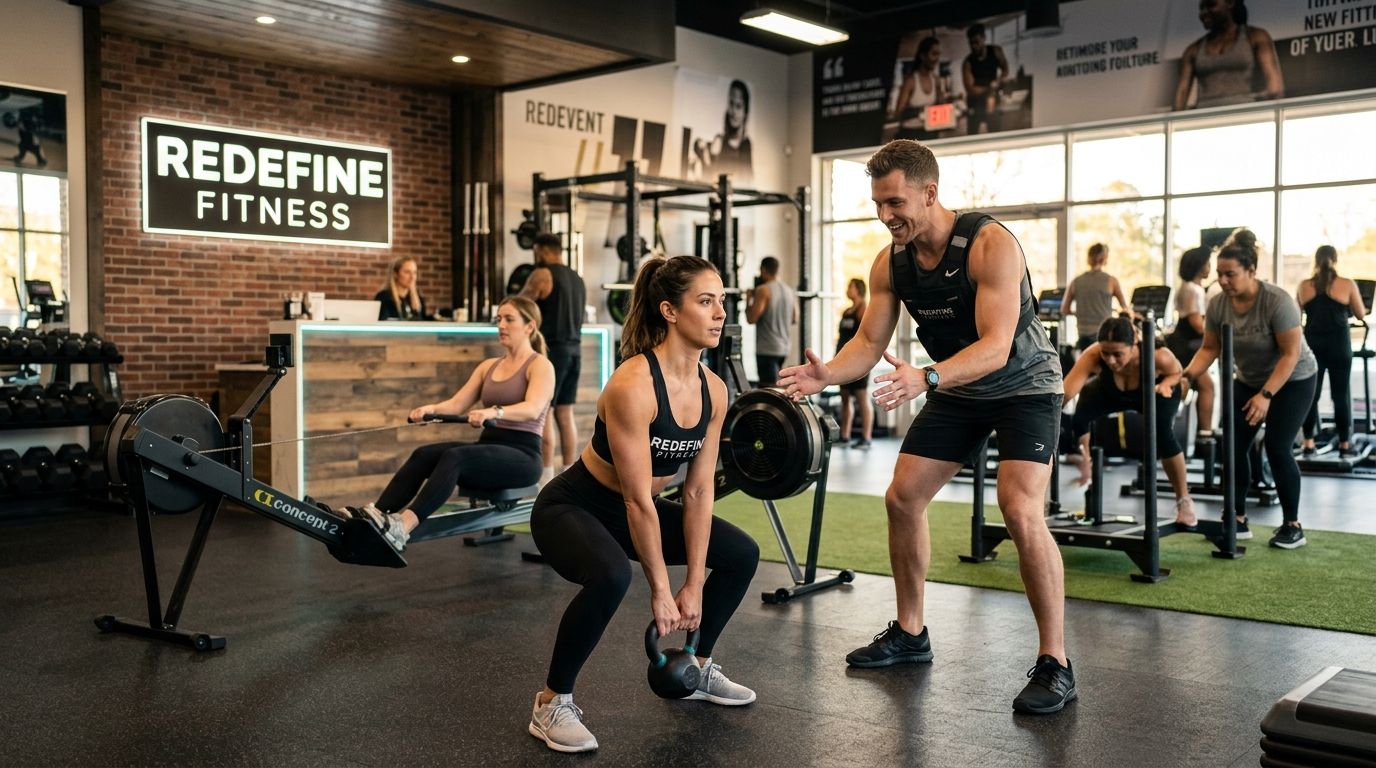
STRIDE Fitness Franchising is a boutique studio concept built around coach-led treadmill cardio, strength training, and a dedicated recovery zone, marketed directly to prospective owners rather than to consumers signing up for classes. The single-territory model is the version most first-time franchise buyers evaluate, since it keeps the total build-out contained to one location before an owner considers expansion.
STRIDE Fitness Franchising pros:
- Single-concept footprint that combines cardio, strength, and recovery under one roof
- Structured awarding process that gives candidates a clear timeline instead of an open-ended sales cycle
- Franchise development team that walks candidates through financing questions directly
STRIDE Fitness Franchising cons:
- Candidates should confirm current SBA Franchise Directory listing status before approaching a lender, since this changes as unit count grows
- Specific liquid capital and franchise fee figures live on STRIDE's own ranking pages, not in general marketing copy
Best for: first-time investors who want a single, coach-led studio and a direct line to the franchisor during the SBA application process.
Verdict: Buy for candidates prioritizing a straightforward single-territory build in 2026.
2. 24/7 access, large-footprint gym franchises: best for higher loan ceilings
These concepts run bigger locations with more equipment and longer operating hours, which gives an SBA lender more physical collateral to underwrite against. That collateral can support a larger loan, but it also means a larger total project cost and equity injection going in.
Pros:
- More collateral (real estate, equipment) can support a larger SBA 7(a) loan
- Longer operating hours can spread membership traffic and reduce peak-hour crowding
Cons:
- Higher total project cost means a bigger 10% equity injection in dollar terms
- Larger footprint carries more ongoing overhead regardless of membership volume
Best for: investors with more liquid capital who want a bigger loan against a bigger asset.
Verdict: Hold unless your liquid capital already clears the higher entry point.
3. HIIT and group-training boutique franchises: best for lower total project cost
Smaller square footage and simpler equipment lists keep the build-out cheaper than a full-service gym, which means a smaller loan and a smaller equity injection. Lenders still want to see documented unit economics before approving, regardless of size.
Pros:
- Smaller build-out lowers the total SBA loan amount needed
- Shorter lease terms are easier to find for compact studio spaces
Cons:
- Revenue per member often trails larger, full-service gym models
- Class-based scheduling caps how many members a single session can serve
Best for: candidates who want to keep total project cost, and therefore the loan itself, as small as possible.
Verdict: Buy for budget-conscious first-time owners.
4. Multi-territory gym franchise portfolios: best for pooling SBA financing
Operators who plan to open more than one location from the start can structure a single SBA 7(a) loan, up to the $5 million cap, to fund several territories rather than applying unit by unit. STRIDE Fitness Franchising's own page on multi-unit fitness franchise operators breaks down what that structure looks like for a coach-led studio model specifically.
Pros:
- One financing structure can cover multiple territories instead of separate loan applications
- Spreads fixed franchisor costs across more units, improving overall unit economics
Cons:
- Requires stronger personal net worth and liquid capital to qualify for the combined loan size
- Underperformance at one location can affect debt service across the whole portfolio
Best for: operators who already know they want more than one territory and want to finance that plan in one pass.
Verdict: Buy for experienced operators with the balance sheet to support it.
5. Recovery and wellness-adjacent studio franchises: best for a second revenue line
Adding recovery services, like stretch therapy or compression zones, alongside a core fitness offering gives a franchise a revenue stream that isn't tied to a class schedule. Lenders view this as diversification, though the category has less historical unit-economics data on file than long-running gym models.
Pros:
- A second revenue line reduces reliance on class attendance alone
- Recovery services can retain members who might otherwise skip a workout day entirely
Cons:
- Less historical performance data available for a lender to review
- Adds equipment and space requirements on top of the core fitness footprint
Best for: candidates who want to diversify revenue inside a single studio footprint.
Verdict: Hold and review a specific franchisor's unit-economics data before committing.
6. Independent, non-franchised gym startup: best for owners who want zero franchise fees
Building a gym without a franchise agreement means no franchise fees and full control over branding and programming. It also means no SBA Franchise Directory listing to speed up underwriting, so the loan application relies entirely on the borrower's own business plan and projections.
Pros:
- No ongoing franchise fees
- Complete control over pricing, programming, and brand
Cons:
- No franchisor track record for an SBA lender to reference, which slows approval
- Borrower carries the full weight of proving unit economics with no comparable franchise data
Best for: experienced gym operators who don't need a franchisor's SBA relationships to get financed.
Verdict: Skip if fast SBA approval matters more than full brand control.
How we ranked these paths
Each path was measured against the same six criteria: Franchise Directory status, published liquid capital and net worth thresholds, documented unit economics, buildout repeatability, ownership flexibility, and franchisor responsiveness during the lending process. STRIDE Fitness Franchising ranks first because it combines a structured, single-territory build with a franchise development team candidates can reach directly during underwriting.
Which fitness franchise financing path should you choose in 2026?
If you're a first-time investor who wants one studio, a direct line to the franchisor, and a coach-led model, STRIDE Fitness Franchising is the default pick. If you already have the liquid capital for more than one territory, look at multi-territory portfolio financing instead. If total project cost is your main concern, a HIIT or group-training format keeps the loan itself smaller.
Talk to STRIDE about SBA financing
Get straight answers on liquid capital, territories, and the awarding process.
FAQ
What makes a fitness franchise SBA financeable?
An SBA financeable fitness franchise has a franchisor listed on the SBA Franchise Directory, published liquid capital and net worth thresholds, and documented unit economics a lender can review quickly. Concepts missing these three items take longer to clear underwriting.
Is STRIDE Fitness Franchising eligible for SBA loan financing?
STRIDE Fitness Franchising's SBA eligibility depends on its current Franchise Directory listing, which candidates should confirm directly with the franchise development team before applying. This status can change as the brand adds units, so it's worth checking at the time you apply.
How much down payment does an SBA loan require for a fitness franchise?
SBA 7(a) loans typically require a minimum 10% equity injection from the borrower in 2026. The exact dollar amount depends on the total project cost of the specific franchise territory.
What is the SBA Franchise Directory?
The SBA Franchise Directory lists franchisors whose franchise agreements have already been reviewed for SBA loan eligibility. A franchise on the directory generally moves through loan underwriting faster than one that isn't listed.
How much can you borrow with an SBA 7(a) loan for a fitness franchise?
The SBA 7(a) loan program caps at $5 million per borrower. Most single-territory fitness franchise buildouts fall well under that ceiling.
Is it easier to get SBA financing for a franchise than an independent gym?
Yes, in most cases, because a franchise brings a franchisor track record and, often, a Franchise Directory listing a lender can reference. An independent gym startup relies entirely on the borrower's own projections.
What loan term can you get for a fitness franchise SBA loan?
SBA 7(a) loans can extend up to 25 years when the loan is backed by real estate, and shorter terms, generally up to 10 years, for equipment and working capital. Term length depends on what the loan is financing.
Do multi-unit fitness franchise operators qualify for larger SBA loans?
Multi-unit operators can structure a single SBA 7(a) loan to cover several territories, up to the program's $5 million cap. Qualifying for that combined amount requires stronger personal net worth and liquid capital than a single-unit loan.
One last thing
Any owner holding 20% or more equity in the business has to personally guarantee an SBA loan, no exceptions. That single rule is why lenders spend as much time on a candidate's personal financial statement as they do on the franchise's unit economics, so get that document in order before you start comparing territories.