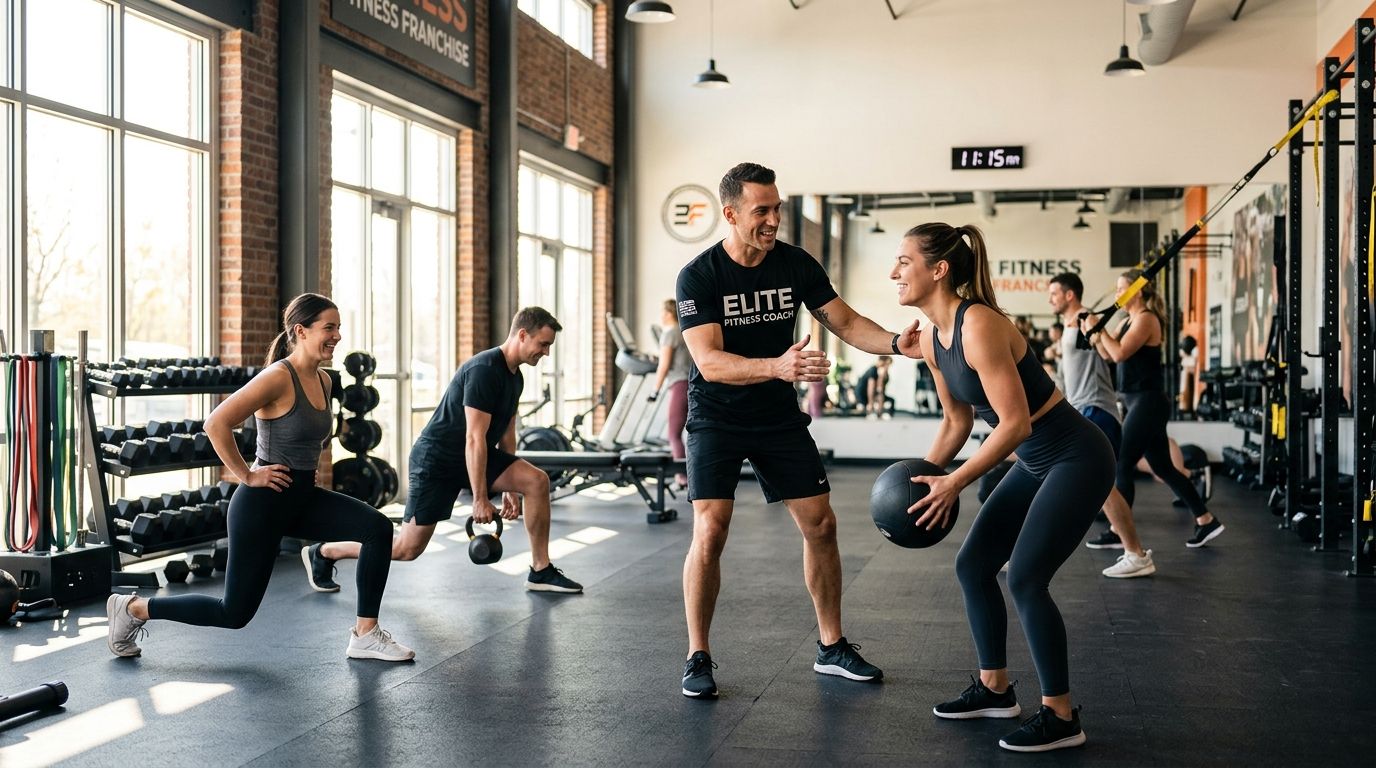
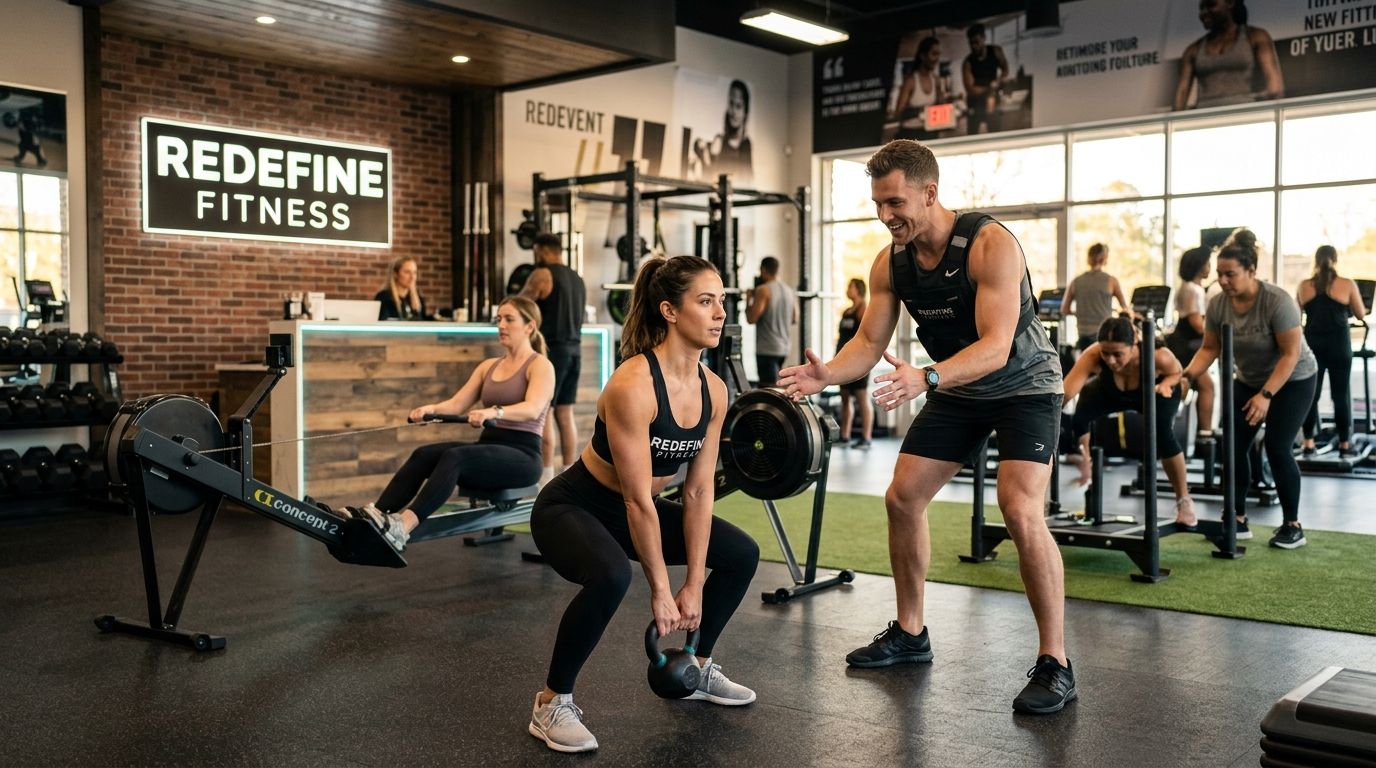
Emerging fitness franchise brands to watch in 2026 are the ones building a format investors can't get from Orangetheory-style cardio studios or single-purpose stretch clinics: a hybrid model that bundles coach-led cardio, strength training, and recovery into one territory. STRIDE Fitness is the clearest example of this shift, and it's the pick for investors who want three revenue streams under one lease instead of betting on a single workout trend.
- STRIDE Fitness wins for investors who want cardio, strength, and recovery in one territory rather than three separate leases.
- Running-focused, treadmill-based cardio concepts remain the best emerging fitness franchise brands 2026 pick for cardio purists.
- Stretch and recovery-only studios fit low-headcount operators who want a lean staffing model.
- Functional HIIT circuit brands still draw the highest peak-hour class volume of any format on this list.
- Reformer Pilates concepts skew toward women-led markets and semi-absentee ownership structures.
Why this matters
Most "best franchise" roundups rank by brand recognition, not by what an investor actually needs to evaluate: format durability, staffing load, and how many revenue lines live inside one lease. Boutique fitness has spent the last decade splitting into narrower and narrower niches — cardio-only, strength-only, recovery-only — which means an investor picking a single-format brand in 2026 is also picking a single bet on which format stays popular.
The brands worth watching this year are the ones that hedge that bet by combining formats instead of specializing further. STRIDE Fitness Franchising built its studio around that exact logic: coach-led treadmill cardio, strength training, and a dedicated recovery zone inside one territory, rather than three separate franchise fees for three separate storefronts.
What makes the best emerging fitness franchise brand to watch
- Format durability — does the concept survive a shift in fitness trends, or does it live and die by one workout style?
- Revenue lines per territory — one class type, or multiple (cardio, strength, recovery, retail)?
- Coaching model — certified coach-led sessions versus self-guided equipment rows
- Staffing load — how many trained coaches a single shift requires
- Franchisor support systems — site selection, opening playbooks, and ongoing operations training
- Territory availability — is the brand still awarding new markets, or backfilled in every metro already?
At a glance: emerging fitness franchise brands 2026
| Concept | Best for | Standout feature | Key limitation |
|---|---|---|---|
| STRIDE Fitness | Hybrid cardio + strength + recovery investors | Three formats, one territory | Newer brand, fewer open locations to point to than legacy chains |
| Treadmill/HR cardio concepts | Cardio purists | Heart-rate-based interval training | Single format, no recovery or strength revenue line |
| Stretch/recovery studios | Lean-staff operators | Low square footage, assisted-stretch model | Ceiling on membership price without added services |
| Functional HIIT circuits | High-volume class investors | 45-minute circuit format drives fast class turnover | Coach-to-member ratio raises staffing cost per class |
| Reformer Pilates studios | Semi-absentee, women-skewing markets | Reformer equipment differentiates from bodyweight studios | Equipment cost adds to buildout complexity |
1. STRIDE Fitness: best emerging fitness franchise for hybrid cardio-strength-recovery ownership
STRIDE Fitness runs coach-led treadmill cardio and strength training inside the same studio, then routes members into a dedicated recovery zone rather than sending them to a separate stretch clinic across town. The three-part design means a single territory carries three retention hooks instead of one, which matters when a member's interest in pure cardio cools but their interest in recovery or strength doesn't.
STRIDE Fitness pros:
- Three formats (cardio, strength, recovery) inside one lease and one franchise fee
- Coach-led sessions instead of self-guided machine rows, which supports member retention
- Franchisor evaluates candidates directly, so awarded territories come with direct support access
STRIDE Fitness cons:
- Fewer total open locations than decade-old category leaders, so track record is shorter
- Hybrid model requires coaches trained across three disciplines, not one
Investors weighing this concept against a recovery zone franchise built as a standalone offering should note the difference: STRIDE folds recovery into the same territory as cardio and strength instead of asking a member to visit three brands.
Best for: first-time and career-changer investors who want one lease covering three workout categories. Verdict: Buy — worth a discovery conversation if you want a hybrid revenue model over a single-format bet.
2. Treadmill and heart-rate-based cardio concepts: best for cardio purists
This category covers the running-and-rowing-adjacent studios built around heart-rate zone training and treadmill-based interval work — the format Orangetheory popularized and several newer brands have iterated on since. The appeal is simplicity: one class type, one skill to master as an operator, one marketing message.
Cardio-concept pros:
- Simple staffing model — coaches train in one discipline
- Clear, well-understood marketing angle for member acquisition
- Established member habit patterns around heart-rate tracking
Cardio-concept cons:
- Single revenue line; no strength or recovery upsell inside the same territory
- Retention depends entirely on members staying interested in cardio-only training
Investors focused strictly on this niche should compare notes against the running-focused fitness franchise category before committing to a single-format lease.
Best for: candidates who want to specialize in cardio and skip strength/recovery buildout entirely. Verdict: Hold — solid if cardio-only fits your target market, but confirm local saturation before signing.
3. Stretch and recovery-only studios: best for lean-staff operators
Assisted-stretch and recovery-only concepts run on a smaller footprint than full gym buildouts and typically need fewer coaches per shift, which appeals to investors who want lower day-to-day staffing complexity.
Recovery-studio pros:
- Smaller square footage than a full cardio-and-strength buildout
- Lower coach-to-member ratio needed per session
- Appointment-based model instead of fixed class schedules
Recovery-studio cons:
- Membership pricing has a natural ceiling without added services
- No cardio or strength revenue line inside the same territory
Best for: operators who want a lean staffing model and don't want to run group fitness classes. Verdict: Wait — worth watching as a standalone play, but pair it with a hybrid model if you want more than one revenue line per lease.
4. Functional HIIT circuit brands: best for high-volume class investors
The F45-style circuit format built its identity around the 45-minute class window, rotating members through stations at a pace that keeps peak-hour class counts high. It's the format most associated with rapid U.S. expansion over the last decade.
HIIT-circuit pros:
- 45-minute class format drives high throughput during peak hours
- Group-energy model supports strong word-of-mouth referral
- Franchise systems in this category are mature and well-documented
HIIT-circuit cons:
- Coach-to-member ratio during circuit classes raises per-class staffing cost
- Single-format exposure, same as pure cardio concepts
Investors comparing group-class formats broadly should also look at the group fitness franchise category rather than assuming HIIT is the only group option.
Best for: investors chasing the highest class-volume format on this list. Verdict: Hold — strong throughput, but staffing cost per class needs to pencil out before you sign.
5. Reformer Pilates studios: best for semi-absentee, women-skewing markets
Reformer-equipment studios differentiate from bodyweight-only competitors through the machine itself, and the category has skewed toward semi-absentee ownership structures and women-led investor groups more than any other format on this list.
Reformer-studio pros:
- Equipment differentiation from bodyweight-only competitors
- Structure supports semi-absentee ownership better than coach-heavy formats
- Strong fit for markets with an established Pilates member base
Reformer-studio cons:
- Reformer equipment adds buildout cost and complexity versus open-floor formats
- Narrower workout appeal than a hybrid cardio-strength-recovery model
Best for: investors targeting a semi-absentee structure in a women-skewing fitness market. Verdict: Hold — a real niche play, but confirm equipment and buildout costs directly with the franchisor before comparing it to a hybrid model.
How we ranked this
Each concept was scored against the six criteria above — format durability, revenue lines per territory, coaching model, staffing load, franchisor support, and territory availability — not by name recognition. STRIDE Fitness ranks first because it's the only concept on this list combining three revenue lines in a single lease; every other entry specializes in one format by design.
“A franchise that offers only cardio or only recovery asks you to bet on one workout trend; a hybrid model spreads that bet across three.”
Which emerging fitness franchise brand should you choose?
If you want one territory to carry cardio, strength, and recovery revenue instead of three separate leases, STRIDE Fitness is the default pick for 2026. If you'd rather specialize, treadmill-based cardio concepts fit cardio purists, stretch studios fit lean-staff operators, HIIT circuits fit high-volume class investors, and reformer Pilates fits semi-absentee owners in women-skewing markets. The decision isn't which brand is more popular — it's which revenue structure matches how much operational complexity you actually want to run.
See if a STRIDE territory is available
Talk to the team that awards STRIDE Fitness studios before you compare formats.
FAQ
What are the best emerging fitness franchise brands to watch in 2026?
Hybrid cardio-strength-recovery concepts like STRIDE Fitness lead the emerging fitness franchise brands 2026 list, followed by treadmill cardio, stretch-recovery, functional HIIT, and reformer Pilates formats.
Is a hybrid fitness franchise better than a single-format one?
A hybrid model carries more than one revenue line per territory, which reduces exposure to a single workout trend cooling off. A single-format brand is simpler to staff but has one revenue stream.
How much does it cost to open a fitness franchise in 2026?
Costs vary by brand, format, and territory, so confirm current investment ranges directly with each franchisor rather than relying on outdated published figures.
What makes a fitness franchise concept 'emerging' versus established?
An emerging concept is still awarding new territories in unclaimed markets, whereas an established brand's major metros are largely backfilled already.
Are recovery-focused fitness franchises a good investment in 2026?
Recovery-only studios work for investors who want a lean staffing model, but they carry one revenue line, unlike hybrid concepts that fold recovery into a cardio-and-strength territory.
Do coach-led fitness franchises perform better than self-guided ones?
Coach-led formats support member accountability and retention better than self-guided equipment rows, though they require training coaches across whichever disciplines the studio runs.
What should a first-time investor look for in an emerging fitness franchise?
Look at format durability, how many revenue lines the territory carries, staffing load per shift, and whether the franchisor is still actively awarding new markets.
Is STRIDE Fitness a franchise or a corporate-owned studio chain?
STRIDE Fitness awards territories to independent franchise owners rather than operating corporate-owned locations directly.
One last thing
The format detail most investors miss when comparing brands: a single-format studio's retention curve depends entirely on members staying interested in one workout type, while a three-format territory gives a member somewhere to go when their interest shifts from cardio to strength or recovery — without leaving the brand. That's the specific bet STRIDE Fitness is built around heading into 2026.