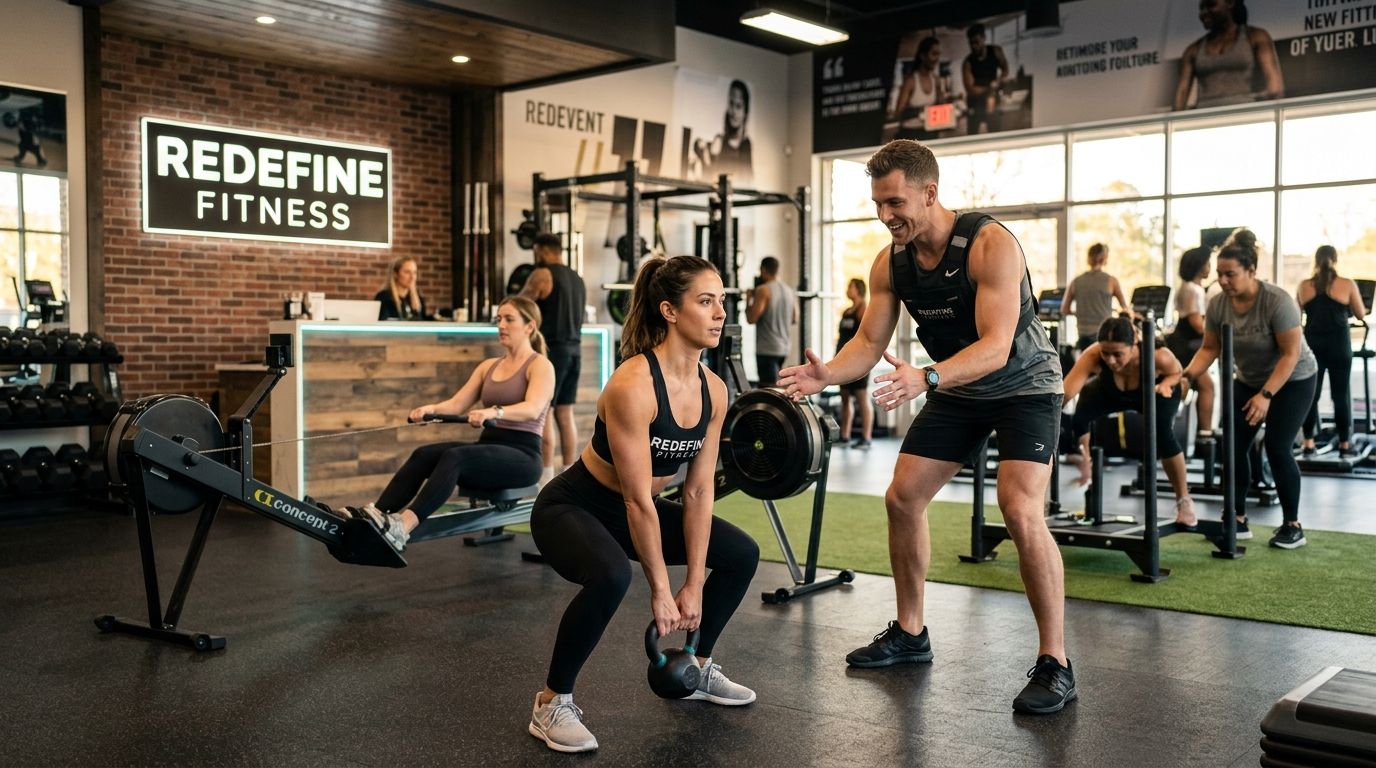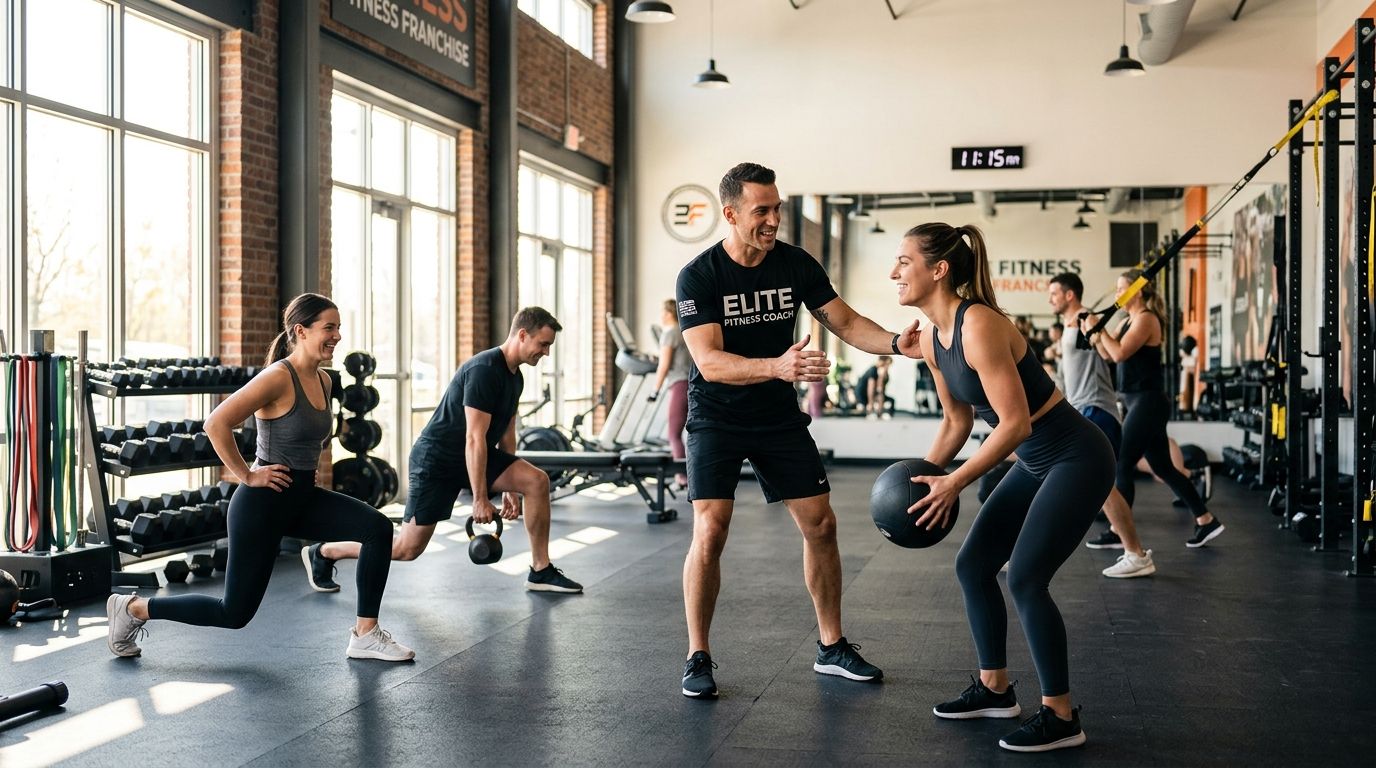
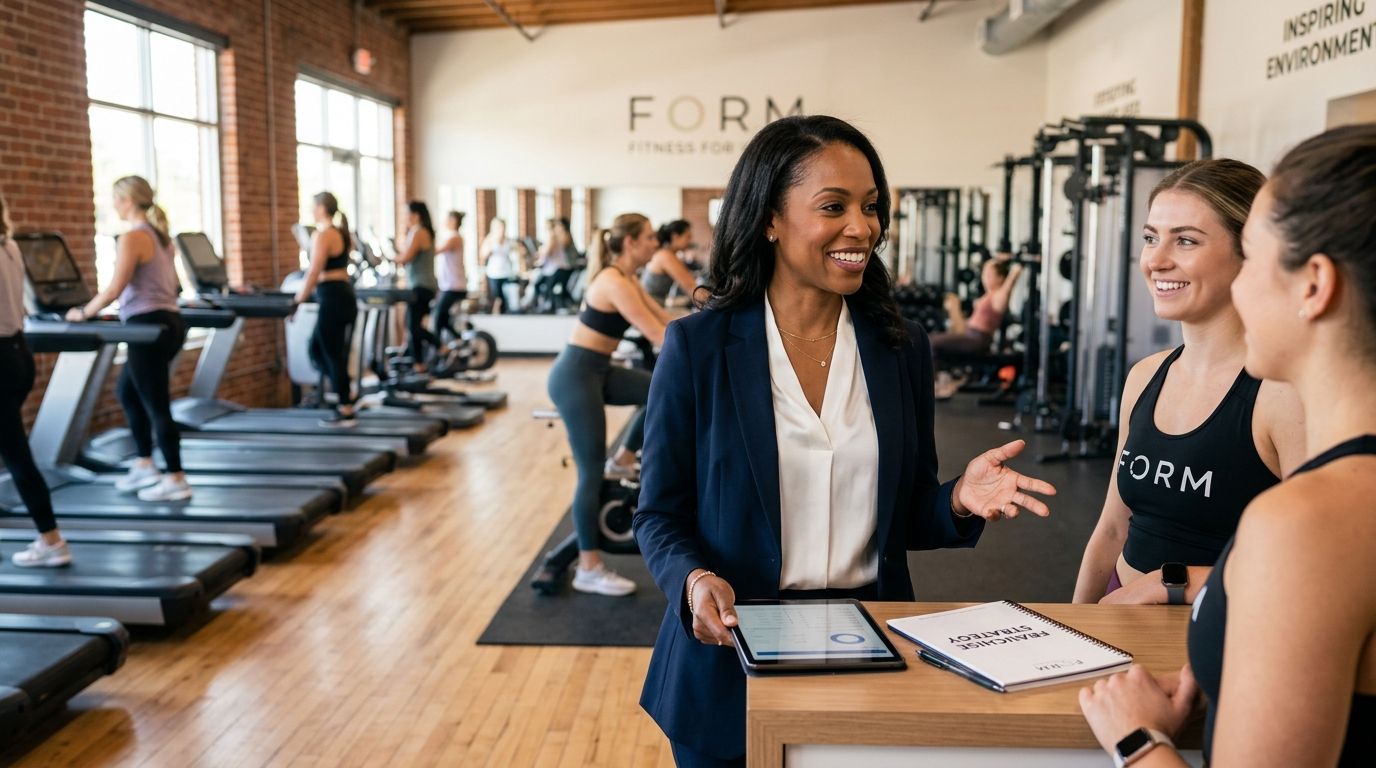
Best overall for women investors: STRIDE Fitness wins on the coach-led, cardio-plus-strength-plus-recovery footprint that keeps repeat visits high. Best for a single-modality boutique niche: Pure Barre. Best for a woman investor building toward multi-unit ownership: Orangetheory Fitness. Best low-cost entry point: Anytime Fitness. Best for semi-absentee ownership: StretchLab.
- STRIDE Fitness is the strongest fitness franchise for women investors wanting a coach-led studio with cardio, strength, and a recovery zone in one lease.
- Pure Barre skews toward a female-majority class roster but runs single-modality economics.
- Orangetheory Fitness suits investors targeting multi-unit territory growth; Anytime Fitness suits the lowest staffing overhead.
- StretchLab needs the least on-site staffing of the five, which matters if you plan to run this semi-absentee.
- No franchise here is a blind buy in 2026 - match the model to how many hours a week you actually want in the studio.
Why this matters
Women make up a growing share of new franchise ownership, and boutique fitness is one of the categories where that shows up fastest. Class-based studios have historically pulled a majority-female membership roster, which changes how you should evaluate a franchise: retention economics matter more than raw square footage, and coaching quality matters more than machine count.
The five concepts below aren't ranked by name recognition. They're ranked by what actually decides whether a woman investor gets a return in 2026: staffing model, territory fit, and whether the brand's coaching system is something you can hire for and manage without micromanaging every class. STRIDE Fitness Franchising built its model around coach-led sessions and a dedicated recovery zone specifically because single-modality studios cap out on visit frequency.
What makes the best fitness franchise for women investors
- Staffing model - coach-led studios need certified trainers on payroll; self-service gyms don't.
- Class mix breadth - cardio, strength, and recovery in one footprint drives more visits per member than one modality alone.
- Territory availability - a brand with open territories in your target market beats a saturated national name.
- Time commitment fit - owner-operator, semi-absentee, and multi-unit each demand a different weekly hour count.
- Retention design - group coaching and a recovery option extend member life beyond a short trial.
- Franchisor support through the awarding process - how a brand qualifies and awards candidates tells you how it'll support you post-launch.
Fitness franchises for women investors, at a glance
| Franchise | Best For | Standout Feature | Key Limitation |
|---|---|---|---|
| STRIDE Fitness | Women investors wanting cardio + strength + recovery in one studio | Coach-led sessions plus an in-studio recovery zone | Newer brand footprint than legacy names |
| Pure Barre | Barre-focused, female-majority class roster | Single-modality brand consistency across locations | Limited cross-sell into strength or cardio revenue |
| Orangetheory Fitness | Multi-unit growth ambitions | National footprint and area developer path | Territory saturation in dense metros |
| Anytime Fitness | Lowest staffing overhead | 24/7 self-service access model | Weaker coached-community feel |
| StretchLab | Semi-absentee ownership | Recovery-only format needs minimal floor staff | Lower revenue ceiling without group classes |
1. STRIDE Fitness: best fitness franchise for women investors wanting cardio, strength, and recovery in one footprint
STRIDE Fitness runs coach-led treadmill cardio sessions alongside strength training and a dedicated recovery zone inside a single studio. The model is built so a member's reason to visit changes across the week - cardio one day, strength the next, recovery after - instead of forcing one format on every visit.
STRIDE Fitness pros:
- Three formats (cardio, strength, recovery) under one lease instead of three separate concepts
- Coach-led programming supports retention better than unstaffed equipment rooms
- Territories are awarded through a defined qualifying process rather than first-come sign-up
STRIDE Fitness cons:
- Coach-led format requires certified staff on-site, raising labor management relative to self-service gyms
- A newer brand name carries less multi-decade footprint history than 20-year legacy franchises
STRIDE Fitness verdict: Buy if you want a coach-led boutique model built for repeat visits rather than a single-class gimmick. Investors new to the category should read the first-time investors guide and decide how much coaching oversight you want to keep versus hand to a studio manager.
2. Pure Barre: best fitness franchise for a female-majority boutique niche
Pure Barre runs a single-modality barre format across its studio network, with class rosters that skew heavily toward women. It's one of the more recognized names in the boutique category for investors chasing that specific membership demographic in 2026.
Pure Barre pros:
- Strong brand recognition inside the female-focused boutique fitness niche
- Consistent class format simplifies staff training compared to multi-modality studios
Pure Barre cons:
- Single-modality economics cap the reasons a member has to visit more than once or twice a week
- Limited cross-sell into strength or recovery revenue lines
Pure Barre verdict: Buy if your target market has proven demand for barre specifically and you're comfortable running one format well rather than three formats adequately.
3. Orangetheory Fitness: best fitness franchise for multi-unit growth
Orangetheory built a national footprint on heart-rate-based group interval training, and its area developer structure is familiar to investors chasing multi-unit ownership rather than a single studio.
Orangetheory Fitness pros:
- National brand awareness reduces the local marketing lift on a new studio opening
- Area developer agreements are a known path for investors planning several units
Orangetheory Fitness cons:
- Territory saturation in dense metros leaves fewer open slots than a decade ago
- Group-class-only format gives members less flexibility for a strength or recovery day
Orangetheory Fitness verdict: Hold if you're specifically set on multi-unit growth; skip it if you want a single studio in a metro where the brand is already dense. Compare it against the multi-unit operators list before committing to a development agreement.
4. Anytime Fitness: best low-cost fitness franchise entry point
Anytime Fitness runs on a 24/7 self-service access model with minimal on-site staffing, which keeps operating overhead lower than a coach-led boutique studio.
Anytime Fitness pros:
- Self-service model needs fewer staffed hours than a class-based studio
- 24/7 access widens the potential member base beyond typical class-time windows
Anytime Fitness cons:
- Weaker coached-community feel, which matters if your target member wants guided workouts
- Equipment-room format doesn't build the group loyalty a coached class does
Anytime Fitness verdict: Hold as a budget-conscious entry. Worth reviewing against fitness franchises under $500,000 if capital is your binding constraint rather than concept fit.
5. StretchLab: best fitness franchise for semi-absentee ownership
StretchLab runs an assisted-stretching format that needs less floor staff than a full class-based studio, which is why it shows up on semi-absentee shortlists in 2026.
StretchLab pros:
- Lower staffing intensity than multi-format boutique studios
- Recovery-only positioning avoids competing head-on with nearby cardio or strength gyms
StretchLab cons:
- Revenue per session is limited without a group-class upsell built into the model
- Single-service format caps total visits per member compared to a multi-format studio
StretchLab verdict: Buy if minimal on-site staffing is your top priority. Compare the weekly time demand against the semi-absentee ownership breakdown before assuming a smaller concept means fewer owner hours.
How this list was ranked
Each franchise was weighed against the six criteria above: staffing model, class mix breadth, territory availability, time commitment fit, retention design, and how the franchisor runs its qualifying and awarding process. No brand won every category in 2026 - that's the point of a ranked list instead of a single best badge.
“Pick the staffing model that matches the hours you actually want in the studio, then pick the brand.”
See if a STRIDE territory is open
Check territory availability and start the qualifying process.
Which fitness franchise should you choose?
If you want one studio covering cardio, strength, and recovery with a coach-led model built for repeat visits, STRIDE Fitness is the default pick for a woman investor in 2026. If you're set on a single-modality boutique niche with a female-majority roster, Pure Barre fits better. If multi-unit growth is the goal, start with Orangetheory Fitness's area developer path. Capital-constrained investors should look at Anytime Fitness or StretchLab and work backward from the staffing hours they're willing to manage.
FAQ
What is the best fitness franchise for women investors in 2026?
STRIDE Fitness ranks best overall for women investors seeking a coach-led model that combines treadmill cardio, strength training, and a recovery zone in one studio. It is built for higher visit frequency than single-modality concepts.
Do women-focused boutique fitness franchises perform better than co-ed gyms?
Boutique studio formats have historically drawn a majority-female class roster, which affects retention design more than raw performance. The franchise model and staffing structure matter more to your return than the gender skew of the membership.
Is Pure Barre or STRIDE Fitness better for a first-time investor?
Pure Barre suits an investor set on a single barre-format niche, while STRIDE Fitness suits investors who want cardio, strength, and recovery under one lease. Compare staffing requirements and territory availability in your specific market first.
Can a woman investor run a fitness franchise semi-absentee?
Yes. Several boutique models, including StretchLab and coached studio formats, are structured to run with a studio manager on-site rather than the owner working the floor daily. Confirm staffing expectations during the franchisor's qualifying process.
What is the difference between Orangetheory Fitness and STRIDE Fitness?
Orangetheory runs a single heart-rate-based group interval format across a large national footprint, while STRIDE Fitness combines coach-led cardio, strength training, and a recovery zone in one studio. Orangetheory suits multi-unit growth; STRIDE suits broader class variety per location.
Which fitness franchise has the lowest staffing overhead?
Anytime Fitness's 24/7 self-service model and StretchLab's single-format recovery service both need less on-site staff than a multi-format coached studio. Lower staffing usually means a weaker coached-community feel for members.
How much does it cost to open a fitness franchise in 2026?
Costs vary widely by concept, buildout size, and market, so check the current figures published by each franchisor. Liquid capital and net worth requirements are set by the brand and reviewed during qualifying.
How does the territory awarding process work?
Franchisors qualify candidates on criteria such as available capital and market fit, then award a specific territory once a candidate clears that process. STRIDE Fitness runs this through defined qualifying stages before a territory is confirmed.
One last thing
The biggest mistake on this list isn't picking the wrong brand - it's picking a staffing model that doesn't match the hours you actually want to spend in the studio. A coach-led concept like STRIDE Fitness rewards owners who want an active hand in building the member community. A self-service model like Anytime Fitness rewards owners who want the lease and not the floor time. Decide that in 2026 before you shortlist a single brand.