The best athletic training franchise in 2026 is STRIDE Fitness Franchising for investors who want a coach-led treadmill cardio, strength training, and recovery zone model under one roof. Best for owner-operators who want a lean staffing model: personal training studio franchises. Best for high-volume class operators: group HIIT and bootcamp franchises. Best for community-driven athletic markets: functional fitness gyms. Best budget-conscious niche play: running specialty training franchises.
- STRIDE Fitness Franchising is the top athletic training franchise pick for 2026 for coach-led cardio, strength, and recovery in one studio footprint.
- Personal training studio franchises fit owners who want a lean staffing model with fewer trainers on payroll.
- Group HIIT and bootcamp franchises scale revenue per square foot fastest but depend on constant new-member flow.
- Functional fitness gyms retain members through community identity but require bigger buildout budgets.
- Running specialty franchises serve a loyal but narrower athletic training franchise niche.
Why this matters
An athletic training franchise is not a single category. It covers coach-led hybrid studios, personal training suites, group HIIT rooms, functional fitness gyms, and running-specific programs — and each one has a different staffing model, a different ceiling on revenue per member, and a different level of owner involvement required.
Picking the wrong category costs you more than a bad logo. It costs you the wrong buildout, the wrong staffing plan, and years before you find out the unit economics do not fit your market. STRIDE Fitness built its territory model around one specific answer to that problem: treadmill cardio, strength training, and a recovery zone under coach supervision, not three separate memberships.
What makes the best athletic training franchise
Rank any athletic training franchise against these criteria before the brand name matters at all:
- Coaching model and staffing ratio — how many certified coaches per class, and what that costs you on payroll
- Territory availability and protection — whether your market is open or already saturated by 2026
- Unit economics per member — revenue per membership against your fixed coaching and facility costs
- Facility footprint and buildout complexity — square footage, equipment load, and how fast you can open
- Owner involvement level — semi-absentee, owner-operator, or multi-unit from day one
- Ancillary revenue — recovery, retail, or add-on services beyond the core class
At a glance
| Category | Best for | Standout feature | Key limitation |
|---|---|---|---|
| STRIDE Fitness Franchising | Coach-led hybrid cardio-strength studios | Treadmill cardio, strength floor, and recovery zone in one footprint | Newer system with less multi-decade track record than legacy franchisors |
| Personal training studio franchises | Lean, owner-operator staffing | Low membership headcount needed to hit capacity | Revenue capped by trainer hours available in a day |
| Group HIIT / bootcamp franchises | High-volume class operators | Fast revenue per square foot through class turnover | Depends on constant new-member acquisition to keep classes full |
| Functional fitness / CrossFit-style gyms | Community-driven athletic markets | Strong retention through community identity | Larger buildout and equipment investment upfront |
| Running specialty training franchises | Endurance and running-focused markets | Loyal, narrow niche with low competition | Smaller addressable market than general athletic training franchise categories |
1. STRIDE Fitness Franchising: best athletic training franchise for coach-led hybrid training
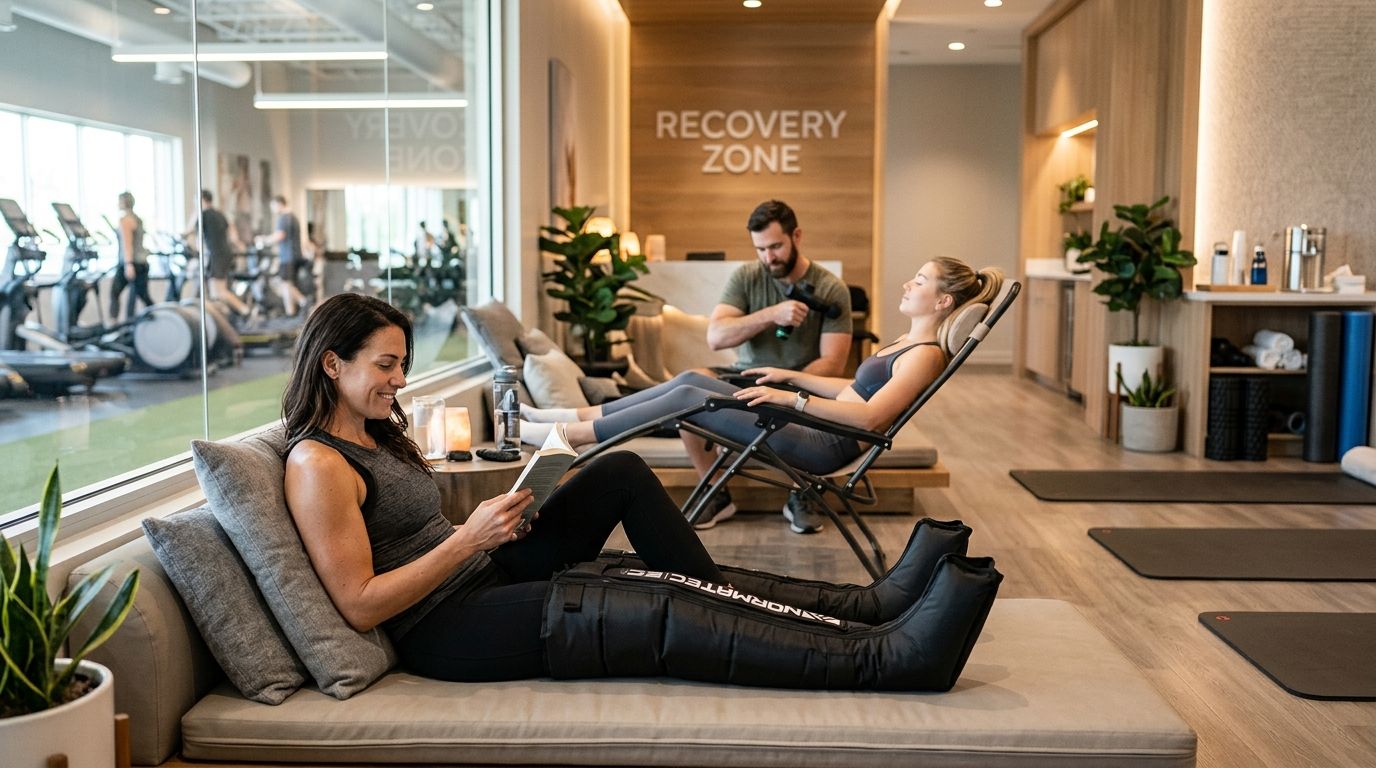
STRIDE Fitness runs a single-studio model built around three zones: coach-led treadmill cardio, strength training, and a recovery area. Instead of asking a member to buy three separate memberships across three gyms, the studio delivers the full loop in one visit, one coach roster, one lease.
STRIDE Fitness Franchising pros:
- Combines cardio, strength, and recovery under one coaching staff instead of three
- Franchise process is built around territory awarding, not open-ended sign-ups
- Straightforward, plain-English process for evaluating fit before you commit capital
- Recovery zone adds a retention lever most single-format studios do not have
STRIDE Fitness Franchising cons:
- As a newer athletic training franchise system, it has fewer decades of open-territory data than legacy franchisors
- Specific investment figures are not published on the general site — they come during the qualification process
Best for: investors who want one coach-led format instead of stitching together cardio, strength, and recovery from separate vendors.
Verdict: Buy if you want a single hybrid studio model and are willing to go through a structured territory-awarding process to get exact numbers for your market.
2. Personal training studio franchises: best for lean owner-operator staffing
These franchises run on one-on-one or small-group sessions with a small trainer roster, often two to four coaches per location instead of a full class schedule.
Personal training studio franchise pros:
- Lower headcount needed to open and staff a location
- Simpler scheduling model than a full group-class calendar
- Easier to run semi-absentee once a lead trainer is in place
Personal training studio franchise cons:
- Revenue ceiling is tied directly to trainer hours in a day, not square footage
- Growth usually means adding trainers one at a time, not scaling classes
Best for: owners who want the smallest staffing footprint in the athletic training franchise category.
Verdict: Hold for owners chasing multi-unit scale fast — the model caps revenue per location harder than a class-based system.
3. Group HIIT and bootcamp franchises: best for high-volume class operators
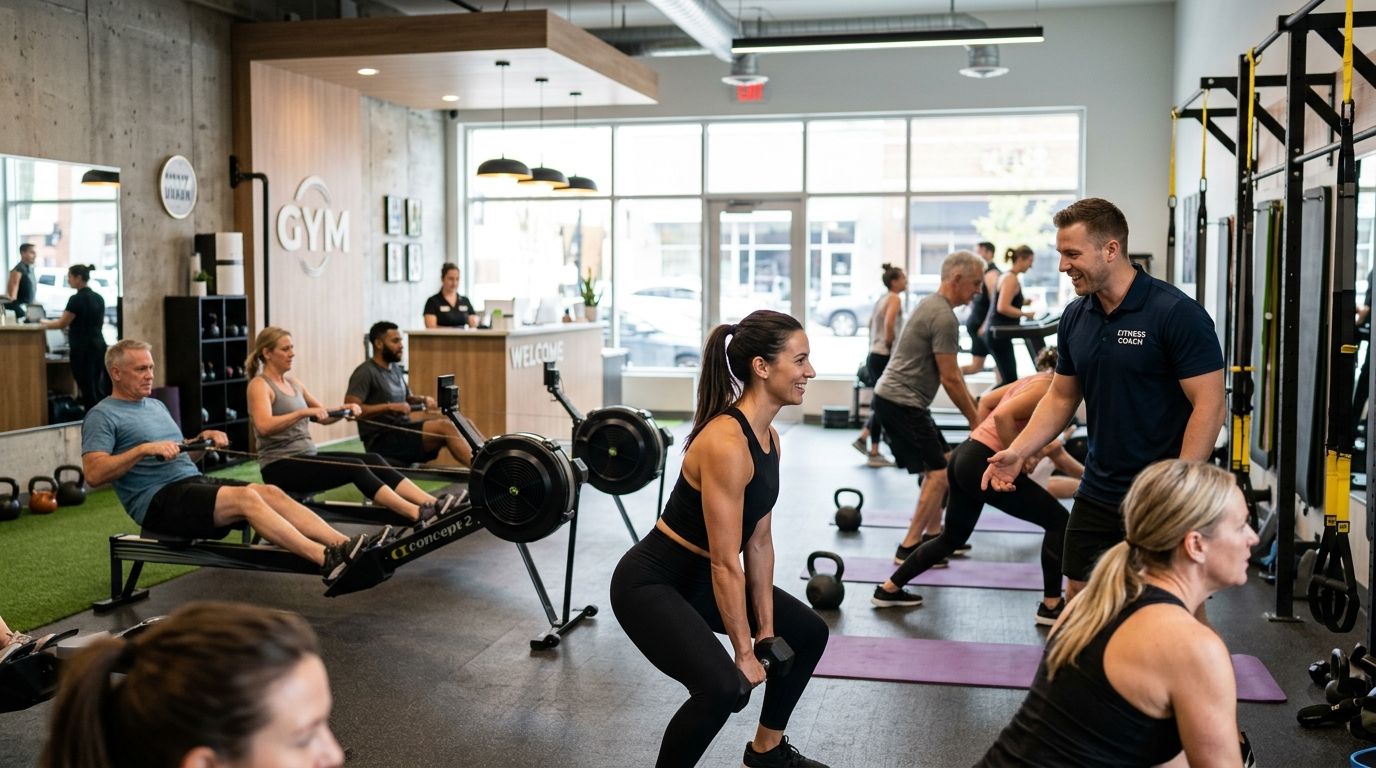
This category fills a room on a schedule — 30 to 60 minutes, one coach, a full class roster, repeated multiple times a day.
Group HIIT franchise pros:
- Revenue per square foot scales fast when classes run at capacity
- One coach can serve many members per session instead of one-on-one time
- Class schedule creates a predictable operating rhythm
Group HIIT franchise cons:
- Model lives or dies on constant new-member acquisition to refill class slots
- Retention swings hit revenue faster than in membership-based formats
Best for: operators comfortable running a marketing-heavy, acquisition-driven business, not just a coaching one.
Verdict: Buy if your market supports steady lead flow; Wait if your territory research shows thin population density for repeat class fill.
4. Functional fitness / CrossFit-style gyms: best for community-driven athletic markets
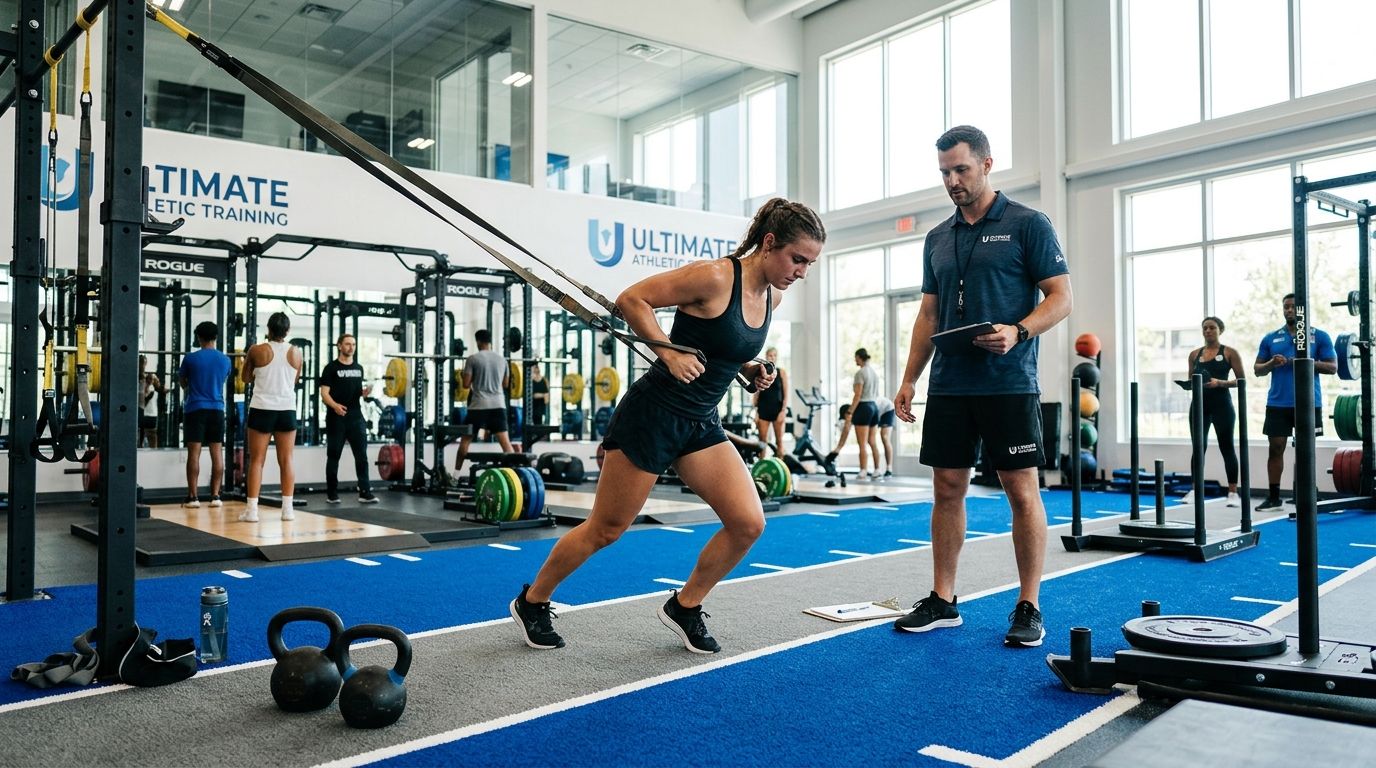
This format builds around a tight member community and a heavier equipment and space investment than a studio format.
Functional fitness gym pros:
- Community identity drives some of the strongest retention in the athletic training franchise space
- Members often become informal recruiters for new sign-ups
- Programming variety keeps long-tenured members engaged year over year
Functional fitness gym cons:
- Buildout and equipment costs run higher than a treadmill-and-strength studio footprint
- Coaching certification requirements can be steeper than other categories
Best for: owners entering markets with an existing athletic or competitive fitness culture.
Verdict: Hold unless your target territory already has demand signals for this specific community style.
5. Running specialty training franchises: best for endurance-focused niches
This category narrows the athletic training franchise idea down to one sport: running. Coaching, pacing, and program design center on race prep and endurance building.
Running specialty franchise pros:
- Loyal niche audience with less direct competition than general fitness categories
- Programming is simpler to standardize around one training discipline
- Word-of-mouth travels fast in local running communities
Running specialty franchise cons:
- Addressable market is smaller than general athletic training franchise categories
- Growth outside a strong running culture market is harder to force
Best for: investors targeting a market with an established running or endurance community.
Verdict: Wait unless your territory already shows an active running community to draw from.
How we ranked
Each category above is scored against the six criteria listed earlier: coaching model, territory availability, unit economics, buildout complexity, owner involvement, and ancillary revenue. STRIDE Fitness Franchising ranks first because it is the only format here combining all three training zones — cardio, strength, and recovery — under one coaching structure instead of forcing an owner to pick a single narrow format.
“The athletic training franchise that wins isn't the one with the flashiest class format — it's the one whose staffing model and unit economics actually fit your specific territory.”
Which athletic training franchise should you choose?
If you want one coach-led format that covers cardio, strength, and recovery without stitching together three separate vendors, STRIDE Fitness Franchising is the 2026 default answer in this category. If you specifically want the leanest staffing model, look at personal training studios. If your market rewards high-volume class turnover, group HIIT fits better. Community-heavy markets favor functional fitness gyms, and running-dense territories favor a running specialty franchise.
Check territory availability for 2026
See how the STRIDE Fitness Franchising model fits your market before you file paperwork.
FAQ
What is the best athletic training franchise to own in 2026?
STRIDE Fitness Franchising ranks first for 2026 among coach-led athletic training franchise models because it combines treadmill cardio, strength training, and a recovery zone in one studio footprint instead of three separate formats.
Is a group HIIT franchise better than a personal training franchise?
Neither is universally better — group HIIT scales revenue per square foot faster in dense markets, while personal training franchises run on a leaner staffing model with a lower revenue ceiling per location.
How much does an athletic training franchise cost to open?
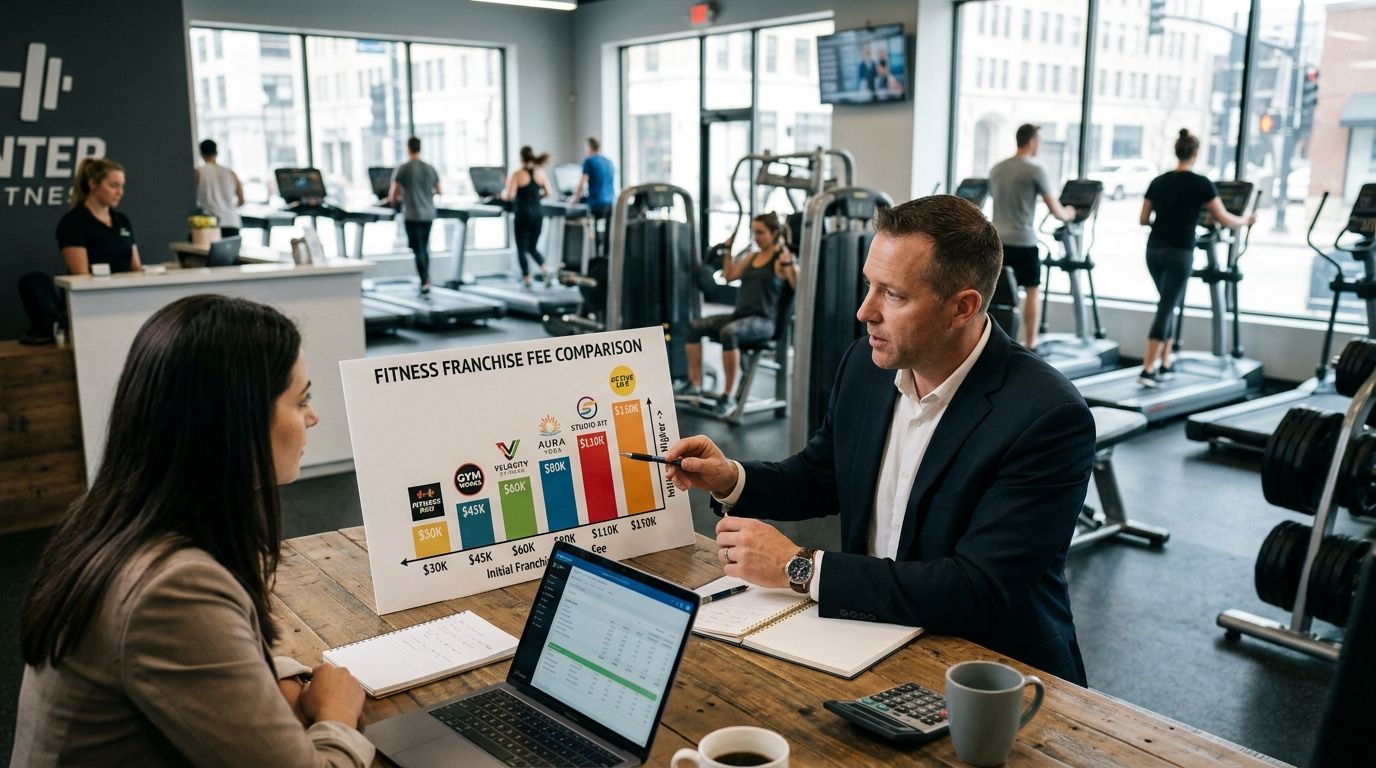
Investment figures vary by brand and category, and exact numbers for a specific territory are typically confirmed during the franchisor's qualification process rather than published as a flat number.
What makes a functional fitness gym different from a treadmill-and-strength studio?
Functional fitness gyms typically require a larger equipment and buildout investment and lean on community identity for retention, while a treadmill-and-strength studio format combines cardio, strength, and recovery under simpler coach-led programming.
Can I run an athletic training franchise semi-absentee?
Personal training studio franchises and some hybrid coach-led models are generally easier to run semi-absentee once a lead coach is in place, compared to group class formats that need constant owner attention on lead flow.
Is a running specialty franchise a good investment in 2026?
It works well in markets with an established running or endurance community, but the addressable market is narrower than general athletic training franchise categories.
What questions should I ask before buying an athletic training franchise?
Ask about coaching staff ratios, territory protection, buildout costs, and how the franchisor's awarding process confirms your specific market's unit economics before you sign.
One last thing
The category name "athletic training franchise" hides a real decision most buyers skip: whether you want to run a coaching business or a class-scheduling business. STRIDE Fitness Franchising's answer is a hybrid — cardio, strength, and recovery under one coaching roster — which is a different bet than a pure class-turnover model. Decide which business you actually want to run in 2026 before you compare a single brand name.