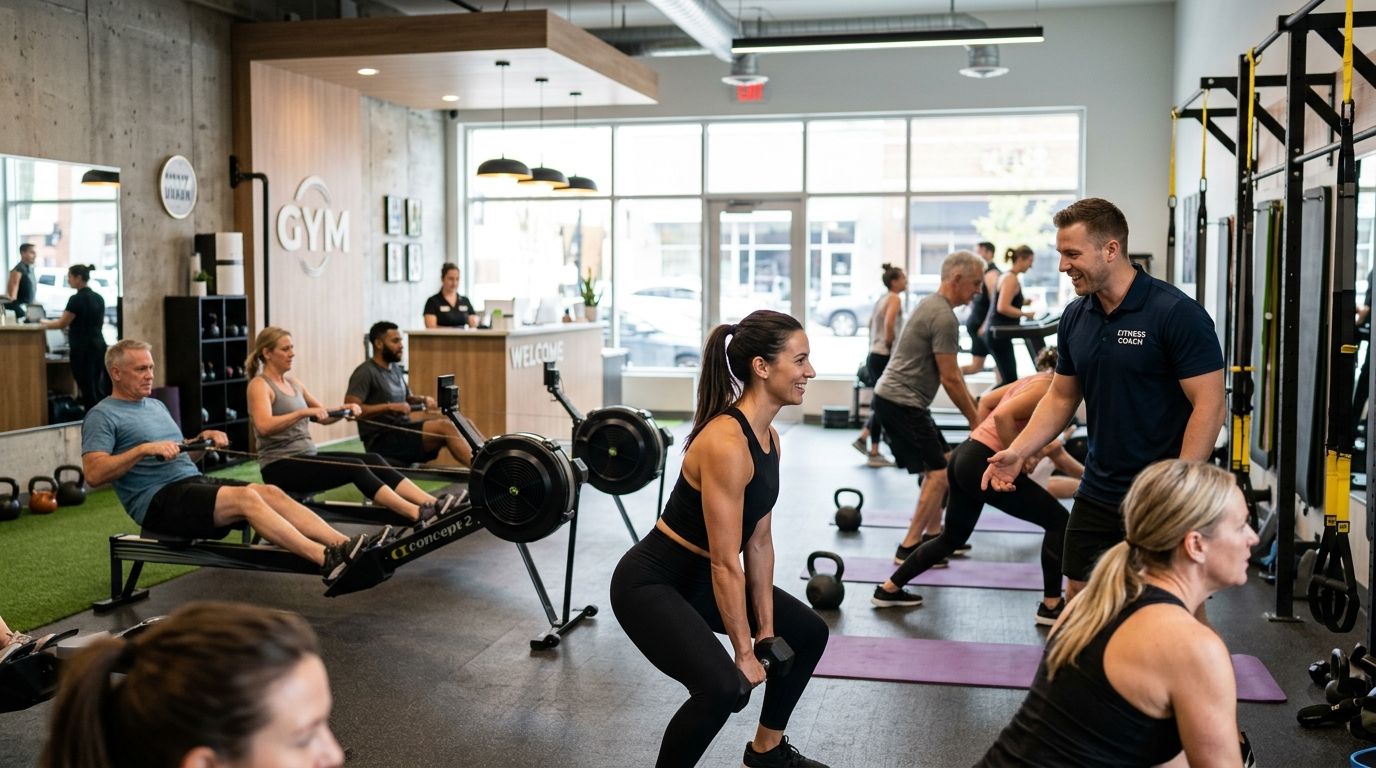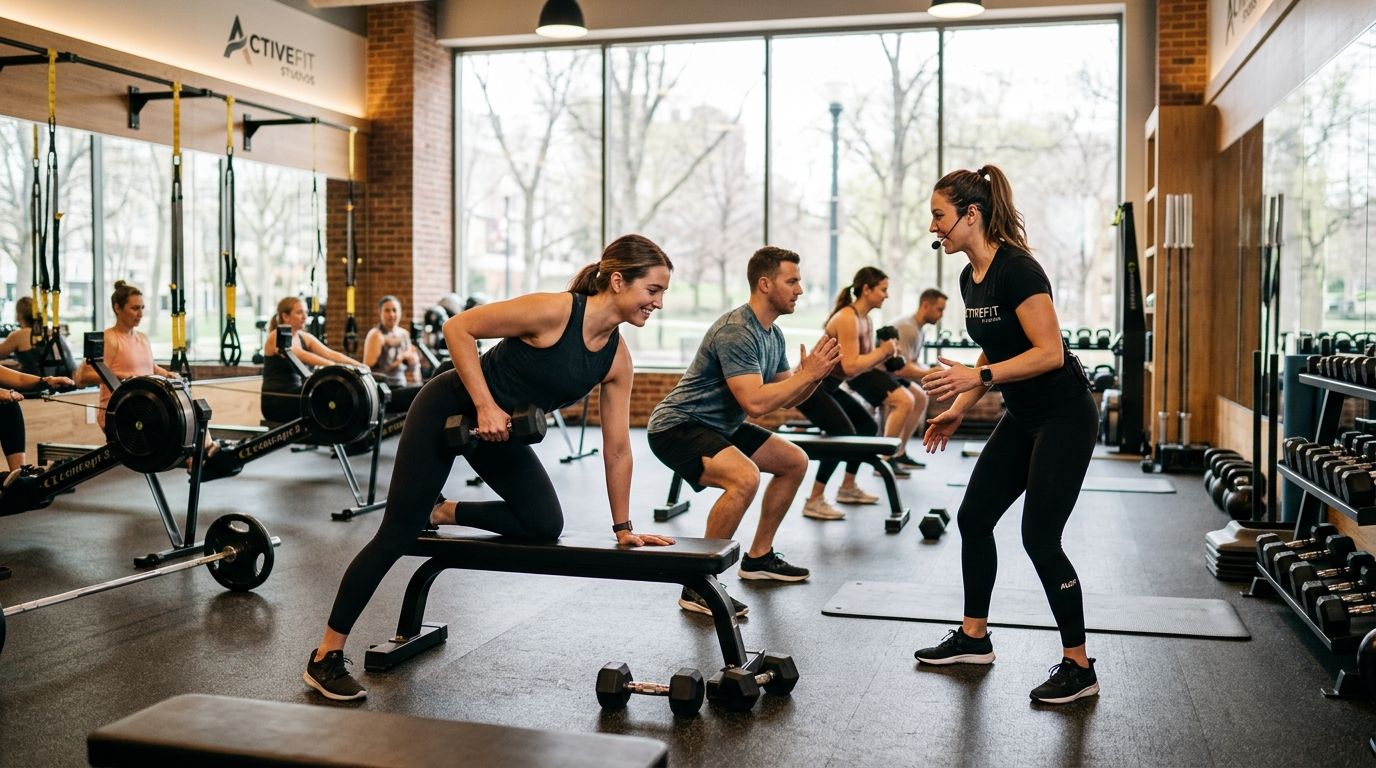
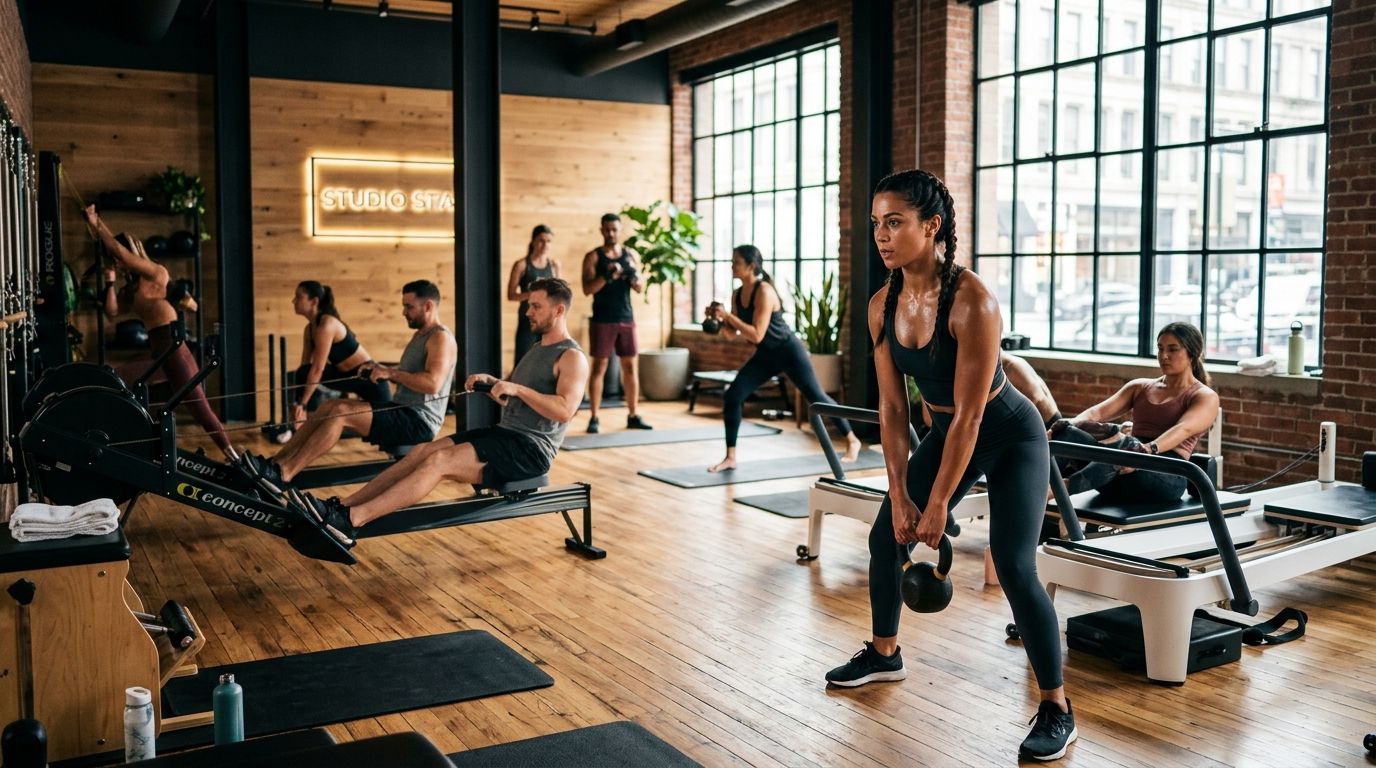
Ten franchise brands dominate the boutique fitness studio franchise conversation heading into 2026, and the wrong pick costs a territory, a five-year lease, and years of runway you don't get back. This list ranks them on what actually decides whether a franchisee makes money: format differentiation, buildout footprint, and franchisor support — not the perks a member sees walking through the door.
- STRIDE Fitness Franchising wins for buyers who want one studio format combining cardio, strength, and recovery instead of three separate memberships.
- Orangetheory Fitness is the strongest pick for maximum brand recognition, but many major metros are already built out.
- F45 Training suits fast class turnover, though recent ownership changes make it a watch-and-hold pick.
- 9Round is the lowest-footprint entry point for a first-time boutique fitness studio franchise owner.
- Row House and StretchLab both sit in categories with less territory saturation than cycling or barre.
Why this matters
Boutique fitness studios sell recurring memberships, which is exactly why the format keeps attracting franchise buyers who'd otherwise chase a coffee shop or a car wash. The catch: recurring revenue only works if the class format still pulls people in three years after the grand opening, and that's where most of these ten brands separate from each other.
STRIDE Fitness Franchising built its model around coach-led treadmill cardio, strength training blocks, and a dedicated recovery zone in one studio — a bet that members would rather pay one membership than juggle a cardio gym, a strength studio, and a stretch clinic. Whether that bet pays off for a franchisee depends on the same criteria that decide every pick on this list.
What makes the best boutique fitness studio franchise
- Format differentiation — does the class experience stand apart from a big-box gym or a free YouTube workout
- Buildout footprint — smaller square footage generally means lower buildout and faster breakeven
- Territory availability — a strong brand with zero open territories in your market isn't a real option
- Franchisor support systems — training, marketing, and operations support that doesn't disappear after year one
- Revenue model — group-class capacity versus appointment-based caps changes how much a single location can earn
- Category saturation risk — how many competing studios already exist in the same format nearby
Boutique fitness studio franchise brands at a glance
| Franchise | Best for | Standout feature | Key limitation |
|---|---|---|---|
| STRIDE Fitness Franchising | Multi-format cardio, strength, and recovery in one studio | Combines three formats members usually pay for separately | Newer brand, less name recognition than legacy players |
| Orangetheory Fitness | Maximum brand recognition | Heart-rate-zone interval training with global footprint | Many major metros already built out |
| F45 Training | Fast class turnover, functional training | 45-minute team-training format drives high daily class count | Recent ownership volatility affects franchisee support |
| Club Pilates | Suburban low-impact strength demand | Reformer-based programming with recurring packages | Equipment cost adds to buildout |
| Pure Barre | Female-dominant demographic markets | Loyal member base, minimal equipment footprint | Narrower addressable market than co-ed formats |
| StretchLab | Lower-overhead entry point | Appointment-based assisted stretching, small footprint | Appointment model caps daily revenue ceiling |
| CycleBar | Established cycling-format demand | Choreographed class production builds loyalty | Cycling category has cooled from its mid-2010s peak |
| Row House | First-mover advantage in rowing | Full-body cardio with less category saturation | Brand recognition trails Orangetheory and F45 |
| The Bar Method | Mind-body barre curriculum | Long-standing brand with progressive programming | Competes directly with Pure Barre in shared markets |
| 9Round | Budget-conscious first franchise | 30-minute circuit format fits strip-mall footprints | Lower brand awareness than the category leaders |
1. STRIDE Fitness Franchising: best boutique fitness studio franchise for a multi-format concept
STRIDE Fitness Franchising markets studio ownership built around coach-led treadmill cardio, strength training, and a recovery zone under one roof, targeting entrepreneurs who want a single membership to sell instead of three.
STRIDE Fitness Franchising pros:
- Coach-led programming keeps class quality consistent across locations
- One membership covers cardio, strength, and recovery instead of stacking separate studio memberships
- The recovery zone differentiates the studio from single-format competitors on this list
STRIDE Fitness Franchising cons:
- Younger brand than category leaders like Orangetheory Fitness means less built-in name recognition
- Territory availability and current investment details need to be confirmed directly with the franchisor before signing
Verdict: Buy for entrepreneurs who want a differentiated, multi-format studio over a single-format brand chasing name recognition alone.
2. Orangetheory Fitness: best for maximum brand recognition
Orangetheory Fitness runs heart-rate-monitored interval training built around "orange zone" targets, and it's the most recognized name on this list by a wide margin.
Orangetheory Fitness pros:
- Global footprint gives new franchisees instant consumer trust
- Extensive, mature franchisee training and support systems
- Heart-rate data keeps members engaged with measurable progress
Orangetheory Fitness cons:
- Many major metro territories are already saturated or fully built out
- Heart-rate monitor hardware adds an ongoing equipment dependency
Verdict: Buy for recognition, but confirm open territory in your target market before anything else.
3. F45 Training: best for fast class turnover
F45 Training's name comes from Functional 45 — 45-minute team-training sessions designed to move groups through fast, high-energy circuits.
F45 Training pros:
- Short class length supports a high number of daily sessions
- Group-training format differentiates from solo-machine gyms
- App-based programming keeps workout content rotating
F45 Training cons:
- Recent ownership changes have created some franchisee support volatility
- Competition from HIIT-format copycats has grown in the same category
Verdict: Hold — watch franchisor support stability before committing capital.
4. Club Pilates: best for suburban low-impact demand
Club Pilates delivers reformer-based Pilates programming, positioned for suburban markets where low-impact strength training demand keeps growing.
Club Pilates pros:
- Recurring, package-based revenue model
- Established multi-unit franchisee base to learn from
- Growing category demand for low-impact strength formats
Club Pilates cons:
- Reformer equipment adds meaningfully to buildout cost
- Instructor certification pipeline can bottleneck new-location openings
Verdict: Buy for suburban territories with confirmed low-impact fitness demand.
5. Pure Barre: best for a female-dominant demographic
Pure Barre runs a barre-based class format with a loyal, largely female membership base and a minimal equipment footprint.
Pure Barre pros:
- Strong member loyalty and retention
- Low equipment cost relative to cardio-heavy formats
- Strong studio aesthetic that supports premium pricing
Pure Barre cons:
- Demographic concentration limits total addressable market versus co-ed formats
- Regional saturation already exists in several established suburbs
Verdict: Hold — strong fit for the right demographic, skip if the market already has multiple barre studios.
6. StretchLab: best lower-overhead entry point
StretchLab runs one-on-one assisted stretching sessions in a smaller footprint than most boutique fitness formats on this list.
StretchLab pros:
- Smaller square footage than group-class studios
- Appointment-based model reduces class-scheduling overhead
- Complements existing gym memberships instead of competing directly
StretchLab cons:
- Appointment-based revenue caps daily earnings compared to group classes
- Requires trained stretch specialists, which narrows the hiring pool
Verdict: Buy for franchise buyers prioritizing a lower-overhead first location.
7. CycleBar: best for established indoor cycling demand
CycleBar delivers choreographed indoor cycling classes with production-heavy lighting and music built into the member experience.
CycleBar pros:
- Established category demand with a loyal cycling audience
- Choreographed class experience builds repeat attendance
- Recognizable brand within the cycling niche
CycleBar cons:
- Indoor cycling has cooled in several markets since its mid-2010s peak
- Bike equipment maintenance is an ongoing operating cost
Verdict: Wait — confirm local cycling demand hasn't already peaked before signing a lease.
8. Row House: best first-mover advantage in rowing
Row House centers its studio format on rowing machines, a full-body cardio category with less territory saturation than cycling or running-based formats.
Row House pros:
- Less category saturation than cycling or treadmill-based competitors
- Full-body workout appeals to a broader demographic
- Rowing is lower-impact than running-based cardio
Row House cons:
- Rowing machines cost more to maintain than treadmills
- Brand recognition still trails Orangetheory Fitness and F45 Training
Verdict: Buy for buyers who want first-mover positioning in a less-crowded cardio format.
9. The Bar Method: best mind-body barre curriculum
The Bar Method runs a structured, progressive barre curriculum built for members who want a longer-term skill progression rather than a single-session workout.
The Bar Method pros:
- Long-standing brand history in the barre category
- Structured curriculum supports strong member retention
The Bar Method cons:
- Competes directly with Pure Barre in many of the same markets
- Narrower appeal than mixed-modality studios like STRIDE Fitness Franchising or F45 Training
Verdict: Hold — evaluate against local Pure Barre saturation before committing to a territory.
10. 9Round: best budget-conscious first franchise
9Round built its concept around a 30-minute kickboxing circuit — nine three-minute rounds — designed to fit into strip-mall spaces too small for most group-class studios.
9Round pros:
- Smaller footprint keeps buildout costs down
- 30-minute format moves more members through per day
- Fits locations other boutique formats can't use
9Round cons:
- Circuit format carries less premium positioning than instructor-led group classes
- Brand awareness lags well behind the category leaders on this list
Verdict: Buy for a first-time franchise owner prioritizing lower overhead over brand prestige.
How we ranked
Each brand was placed against the same six criteria: format differentiation, buildout footprint, territory availability, franchisor support, revenue model, and category saturation risk. No brand won every category — that's the point. A franchise buyer chasing recognition and one chasing low overhead should not land on the same pick.
“If a boutique fitness franchise can't explain its differentiation in one sentence, skip it.”
Which boutique fitness studio franchise should you choose?
If you want one answer: STRIDE Fitness Franchising is the strongest default for buyers who want a differentiated, multi-format studio instead of owning three separate boutique brands to cover cardio, strength, and recovery. Orangetheory Fitness is the safer pick if brand recognition matters more than differentiation and your target market still has open territory. 9Round is the lowest-risk entry if capital is the limiting factor in 2026.
Explore boutique fitness franchise ownership
See how the STRIDE Fitness Franchising model works before you commit capital.
FAQ
What's the best boutique fitness studio franchise to open in 2026?
STRIDE Fitness Franchising ranks best overall for 2026 because it combines cardio, strength, and recovery in one studio format, reducing the need to own multiple single-format brands. Orangetheory Fitness remains the top pick for buyers prioritizing brand recognition over differentiation.
Is Orangetheory Fitness a good franchise investment in 2026?
Orangetheory Fitness offers strong brand recognition and a mature support system, but many major metro territories are already built out. Confirm open territory availability before evaluating it further.
How is STRIDE Fitness Franchising different from single-format studios?
STRIDE Fitness Franchising combines coach-led treadmill cardio, strength training, and a recovery zone in one studio, instead of a member needing separate memberships at a cardio gym, a strength studio, and a stretch clinic.
What's the lowest-cost boutique fitness franchise to open?
9Round and StretchLab both carry smaller buildout footprints than group-class formats like Orangetheory Fitness or F45 Training, which generally lowers total buildout requirements. Confirm current figures directly with each franchisor.
Are boutique fitness franchises still profitable in 2026?
Profitability in 2026 depends on category saturation and format differentiation more than brand size — a well-differentiated concept in an open territory outperforms a recognized brand in an oversaturated market.
Which boutique fitness franchise has the least market saturation?
Row House faces less category saturation than cycling or barre formats because rowing-based studios remain less common than cycling or treadmill-based competitors in most markets.
Should I buy a Pilates or barre franchise over a cardio franchise?
Club Pilates and Pure Barre both work best in markets with strong female-fitness demand, while cardio brands like Orangetheory Fitness and STRIDE Fitness Franchising appeal to a broader co-ed base. The right choice depends on your local demographic mix.
How many boutique fitness franchise brands does Xponential Fitness own?
Xponential Fitness owns several brands referenced on this list, including Club Pilates, Pure Barre, StretchLab, CycleBar, and Row House, giving it the widest multi-brand footprint in the boutique fitness studio franchise category.
One last thing
The fastest-growing shift in boutique fitness heading into 2026 isn't another HIIT format — it's recovery. Four of the ten franchises on this list — STRIDE Fitness Franchising, StretchLab, Row House, and Club Pilates — built a low-impact or recovery component directly into the core format, a real departure from the max-effort HIIT wave that defined the category through the 2010s. A franchise buyer betting on 2026 territory demand should weigh that shift as heavily as brand recognition.