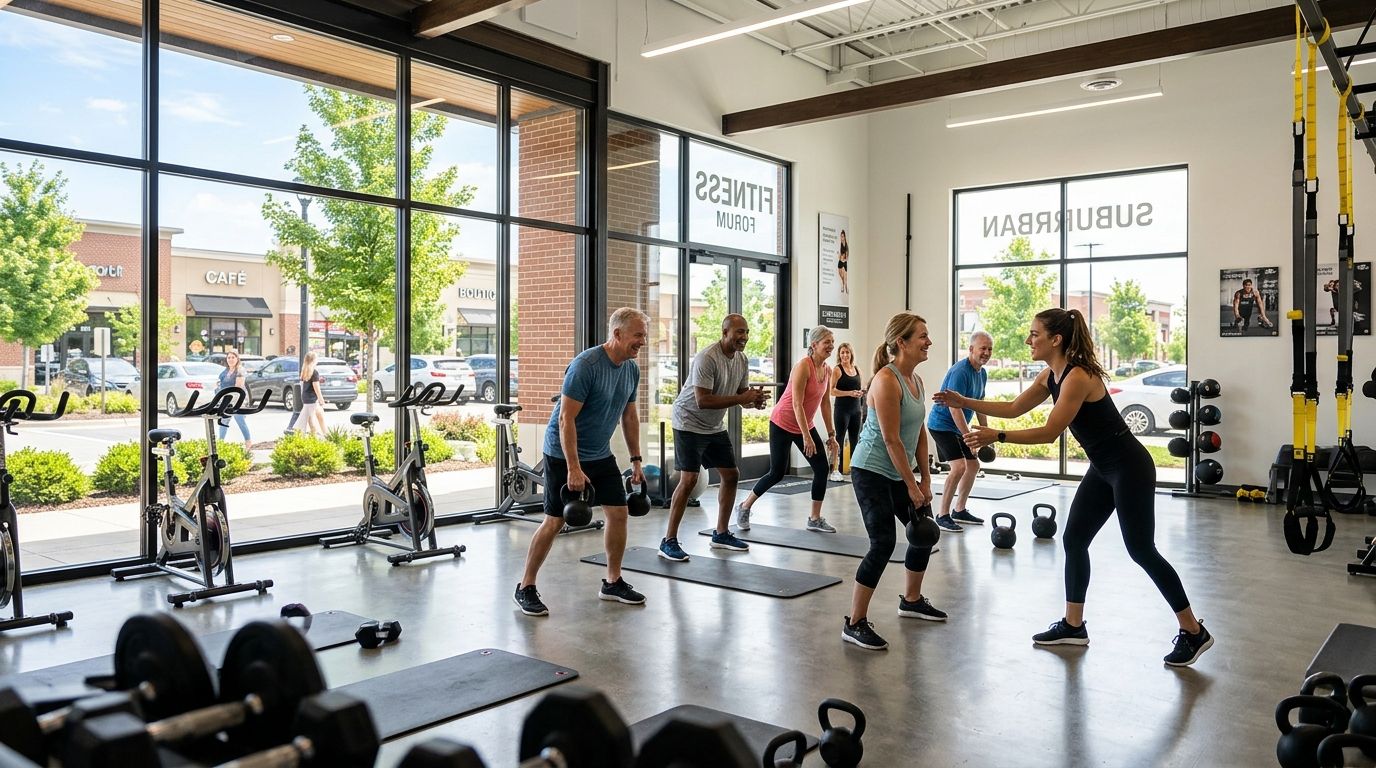

Fitness franchise ownership for nurses and healthcare workers is a path off the shift-work treadmill into owning a boutique studio, with the aim of building income and equity that doesn't depend on hospital scheduling. Clinical staff bring something most franchise candidates don't: years of managing people through stress, tracking outcomes, and working structured shifts, which maps directly onto running coach-led sessions and staffing a studio. The gap is capital and time, not skill — most nurses and healthcare workers evaluating this move are solving for financing and schedule fit first, brand fit second.
- A fitness franchise for nurses and healthcare workers works best as a semi-absentee investment run alongside clinical shifts, not a full walk-away.
- STRIDE Fitness Franchising structures territory awards around net worth and liquid capital, not industry background, which favors healthcare workers with steady income history.
- SBA loans and 401(k) rollovers (ROBS) are the two financing paths healthcare workers use most often to fund a franchise in 2026.
- Nurses working three 12-hour shifts a week have more open weekdays than a typical 9-to-5 candidate, the biggest advantage in this segment.
Why fitness franchise ownership matters for nurses and healthcare workers
Healthcare workers evaluate franchise ownership differently than the average candidate. They're not asking whether it sounds fun. They're asking whether it fits around a 0700 shift and whether it can be financed without draining an emergency fund. That changes which questions matter first: schedule flexibility, financing structure, and whether the brand requires an owner on-site daily.
Nurses and clinical staff also carry two things a franchisor weighs in 2026: documented income history for loan underwriting, and direct experience managing client-facing service under pressure. STRIDE Fitness Franchising evaluates candidates on net worth and liquid capital first, not prior fitness or retail experience. That's a profile most healthcare workers already meet before they ever consider a studio.
How to move from clinical work to studio ownership
Assess your transferable skills honestly
Before touching a franchise disclosure document, take stock of what a clinical background actually gives you and what it doesn't.
- Patient-facing communication transfers to member retention conversations
- Shift-based staffing experience transfers to coach scheduling
- Documentation habits transfer to tracking studio KPIs like member count, class fill rate, and retention
- What doesn't transfer: sales and lead generation, which franchise systems train separately
- Decide now whether you want owner-operator involvement or a semi-absentee structure with a general manager
Calculate your liquid capital and net worth position
Every boutique fitness franchisor sets minimum liquid capital and net worth thresholds before awarding a territory. Run this number before you fall for a brand.
- Pull actual liquid capital: cash, brokerage accounts, anything convertible within 30 days — not home equity
- Separate liquid capital from net worth; franchisors ask for both and they are not the same figure
- Add six months of personal expenses on top of the investment, since studio ramp-up rarely cash-flows from month one
- Compare your position against a liquid capital breakdown across boutique fitness brands before assuming you don't qualify
- Dual-income households and years of shift-differential pay often clear thresholds candidates didn't expect
Choose an ownership model that fits your schedule
This is where most healthcare workers either commit or walk away, because it forces the schedule question into the open.
- Owner-operator: you run daily operations, which conflicts directly with a full clinical schedule
- Semi-absentee: you hire a general manager and coaches and oversee the business on days off
- Semi-absentee works for a nurse on three 12-hour shifts a week; it does not work as a fully passive investment
- Multi-unit ownership is a later-stage decision, not a first territory for someone still working clinically
Line up financing before you shop territories
Financing structure decides which brands are actually reachable, so this comes before brand selection, not after.
- Personal savings cover the smallest share of total investment for most first-time candidates
- SBA 7(a) loans remain the most common financing route for first-time fitness franchisees in 2026
- A 401(k) or IRA rollover (ROBS) funds a franchise without early-withdrawal penalties, using retirement balances many healthcare workers built over a decade of hospital employment
- Review the fitness franchises with SBA loan financing options before assuming you need all cash
- Get pre-qualified before entering a franchisor's discovery process; it changes which territories are realistic
Vet brands on unit economics, not on the workout
Don't shop by logo or by which class you personally enjoy. Shop by unit economics and territory availability.
- Request the brand's current Item 19 financial performance representation from the FDD, not marketing copy
- Confirm territory availability in your specific zip codes before committing to a concept
- Total the royalty rate and ongoing fees as a percentage of revenue, not just the headline franchise fee
- Ask in writing how many hours per week a semi-absentee owner is expected to commit
- Speak to at least three existing franchisees, including one who opened within the last 18 months
Complete the discovery and awarding process
Every legitimate franchisor runs a structured process before awarding a territory. Treat it as mutual qualification, not a sales funnel.
- An initial conversation confirming fit on capital, timeline, and target market
- Financial disclosure review, where you and your accountant read the FDD line by line
- A Discovery Day or equivalent, meeting the operations and support team in person
- Formal award of the territory, which locks your market and starts the build-out clock
- Budget several weeks to a few months depending on how fast financing and paperwork move
Plan your transition timeline out of clinical work
Healthcare workers rarely quit the day they sign a franchise agreement, and franchisors generally don't expect them to.
- Keep clinical income through build-out and opening; most owners need both incomes during ramp-up
- Set a specific revenue or member-count milestone that triggers cutting clinical hours
- Hire or identify a general manager before opening day if the studio is structured semi-absentee
- Reassess at 12 months using real P&L data instead of projections
Comparison: ownership paths for healthcare workers
| Option | Best for | Ownership model | Key limitation |
|---|---|---|---|
| Semi-absentee boutique studio | Nurses keeping a clinical job through ramp-up | Part-time oversight, GM runs daily ops | Depends entirely on a strong general manager hire |
| Owner-operator boutique studio | Healthcare workers exiting clinical work entirely | Full-time, hands-on | Conflicts with any remaining shift schedule |
| Multi-unit franchise agreement | Experienced operators with capital to reinvest | Portfolio ownership across territories | Unrealistic as a first territory for most clinicians |
| Independent gym, no franchise | Candidates wanting full creative control | Full-time, no system support | No brand recognition, no training system, higher failure risk |
Semi-absentee ownership of a boutique fitness franchise is the realistic starting point for most nurses and healthcare workers in 2026, because clinical income keeps funding the household while the studio ramps.
See if your territory is open
Check STRIDE Fitness territory availability and the awarding process before you commit capital.
Common mistakes nurses and healthcare workers make
- Underestimating the general manager hire. Semi-absentee only works when the GM is strong. Treating that hire as an afterthought is the fastest route to a struggling studio.
- Leaving clinical work too early. Dropping a stable income before the studio has a full year of data removes the buffer that got you through underwriting.
- Confusing net worth with liquid capital. Home equity and retirement balances are not cash on hand, and franchisors evaluate the two separately.
- Skipping the Item 19 review. Passing on the financial performance representation because a franchise rep sounded confident is a preventable mistake, not bad luck.
- Assuming a clinical resume alone qualifies you. Territories are awarded on capital position and commitment. Healthcare experience helps with operations, not with qualification.
For a wider view of how first-time candidates are evaluated, the breakdown of fitness franchise opportunities for first-time investors covers the same qualification steps without the clinical-schedule angle.
FAQ
What's the best fitness franchise for nurses and healthcare workers in 2026?
The best fit is a boutique studio offered under a semi-absentee ownership structure, because it lets a healthcare worker keep clinical income through ramp-up. STRIDE Fitness Franchising awards territories on net worth and liquid capital rather than industry background, which suits most clinical candidates' financial profile.
Can a full-time nurse own a fitness franchise?
Yes. Most healthcare workers who invest keep their clinical job through the first year and run the studio through a general manager. Owner-operator involvement only becomes practical once clinical hours are reduced.
Is semi-absentee ownership realistic on a hospital shift schedule?
It is realistic for nurses working three 12-hour shifts a week, since that leaves structured weekdays for oversight. It is not realistic for anyone expecting a fully passive, zero-involvement investment.
How much liquid capital do healthcare workers need to open a fitness franchise?
Liquid capital minimums vary by brand and territory, so compare thresholds across boutique fitness franchises rather than assuming one number. Dual-income households and years of shift-differential pay often put clinical candidates ahead of where they expect.
Can nurses use retirement funds to finance a franchise?
Yes. A 401(k) or IRA rollover through a ROBS structure funds a franchise investment without early-withdrawal penalties. It is one of the two most common financing routes for first-time fitness franchisees in 2026, alongside SBA 7(a) loans.
Do clinical skills transfer to running a fitness studio?
Patient communication, staffing under pressure, and outcome tracking transfer directly to member retention and coach scheduling. Sales and lead generation do not transfer automatically and usually require franchisor training.
Is a fitness franchise a good side investment for a working nurse?
It works as a side investment specifically under a semi-absentee structure with a capable general manager in place. It does not work as a zero-time-commitment investment under any ownership model.
How long does it take a healthcare worker to open a studio?
The discovery and awarding process typically runs several weeks to a few months depending on financing speed and paperwork. Build-out adds further months after the territory is awarded.
One last thing
The healthcare workers who make this work are rarely the ones with the most fitness enthusiasm. They're the ones who treat the general manager hire like a credential check: references, a trial period, and a written escalation plan before opening day. Skip that and the schedule math that made semi-absentee ownership viable collapses inside the first six months of 2026 operations.