STRIDE Fitness ranks first for build-out value among coach-led, multi-revenue studio formats in 2026. Express single-modality studios win on the smallest possible footprint. Traditional big-box gyms win for high-population markets that can fill a large membership base, and premium recovery-only concepts win in affluent suburban territories with strong pricing power.
- STRIDE Fitness wins fitness franchise build-out cost efficiency by combining cardio, strength, and a recovery zone in one lease instead of three.
- Express single-modality studios need the smallest square footage of any format reviewed for 2026.
- Big-box gyms carry the highest build-out cost because the footprint and equipment list are the longest.
- Premium recovery-only concepts cost more per square foot to finish out due to plumbing and HVAC for saunas and cold plunge.
- Every FDD discloses a build-out range in Item 7 — compare that number before you compare the brand.
Why this matters
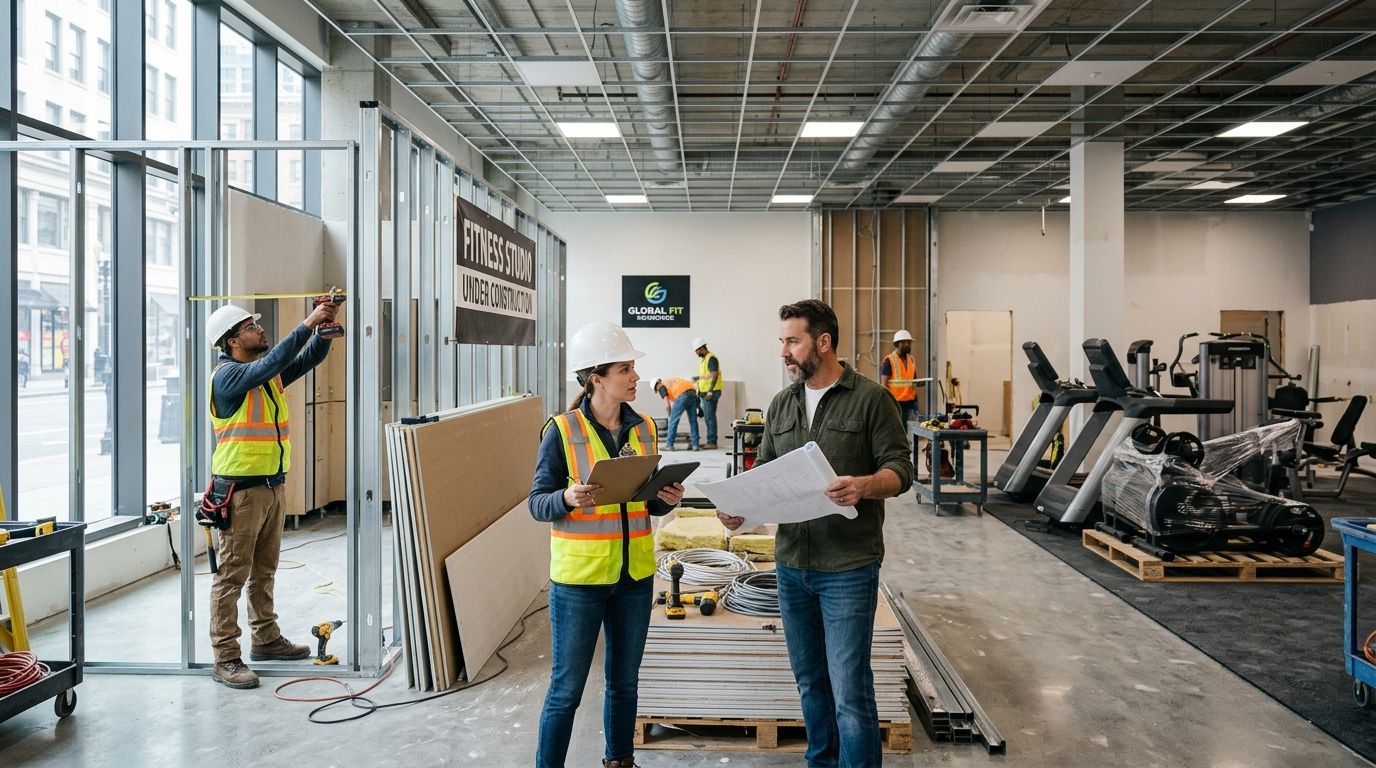
Build-out cost is not the same line item as the franchise fee or the liquid capital requirement, and treating them as interchangeable is how first-time investors miss their real total investment. Build-out covers leasehold improvements, equipment, signage, and the finish-out specific to the format — a recovery zone with plumbing costs differently than an open studio floor.
Every franchisor discloses a build-out range in Item 7 of the Franchise Disclosure Document, a requirement under the FTC's Franchise Rule. That range is the number to compare, not marketing copy. STRIDE Fitness Franchising structures its coach-led model around treadmill cardio, strength training, and a recovery zone, which changes the square footage math compared to a single-modality studio.
Fitness franchise build-out cost, at a glance
| Format | Best for | Standout feature | Key limitation |
|---|---|---|---|
| STRIDE Fitness | Multi-revenue coach-led studio | Recovery zone under the same lease | More square footage than single-modality formats |
| Express single-modality studio | Smallest opening footprint | Minimal equipment package | One revenue stream, no built-in diversification |
| Traditional big-box gym | High-volume, high-population markets | Amenities under one roof | Longest build-out timeline and equipment list |
| Premium recovery-only concept | Affluent suburban territories | High-end finish-out | Narrow customer base, no cardio/strength line |
| Multi-modality functional studio | Markets that reward class variety | Flexible open floor plan | Equipment turnover from portable gear |
What actually drives build-out cost
- Square footage and the base lease rate for the territory
- The equipment package the format requires — cardio decks, strength racks, recovery tools
- The tenant improvement allowance negotiated with the landlord
- Timeline from lease signing to opening day
- Specialty build items: turf, plumbing for a recovery zone or sauna, dedicated sound systems
- Local labor and permitting costs, which swing by market before a single piece of equipment ships
A candidate comparing brands should also check the fitness franchise liquid capital requirements alongside build-out — a low build-out number with a high liquid capital floor still adds up to the same total check.
1. STRIDE Fitness: best build-out value for a coach-led, multi-revenue studio
STRIDE runs treadmill cardio, strength training, and a recovery zone in one lease, so the studio has three functional areas instead of one open room. That's a different math than a single-modality concept, but it's also three revenue lines instead of one.
STRIDE Fitness pros:
- One lease covers three functional areas instead of paying for three separate locations
- The recovery zone differentiates the territory from single-modality competitors in the same trade area
- Coach-led programming needs less specialty flooring than a heavy free-weight big-box layout
STRIDE Fitness cons:
- The recovery zone adds square footage versus a single-modality studio
- A three-area layout takes more planning time than a template-only, one-room concept
Best for: candidates who want three revenue lines under one roof instead of betting the territory on a single modality. The recovery zone concept is the differentiator worth reading before you compare it to a plain cardio-only studio.
Verdict: Buy for owners who want a multi-revenue format from day one.
2. Express single-modality studios: best for the smallest footprint
Cycling-only, rowing-only, or single-format HIIT-box studios run the smallest floor plans of any tier in this comparison, since the layout is one open room built around one piece of programming.
Express studio pros:
- Smallest footprint of any format reviewed for 2026
- Fastest path to opening — one open room, one equipment order
- Fewer equipment categories to source, install, and maintain
Express studio cons:
- One modality means one growth lever; class attendance dips hit revenue directly
- No secondary revenue stream if membership churn rises
- Amenity add-ons (recovery, strength) usually aren't part of the format at all
Best for: the lowest possible opening footprint among the tiers.
Verdict: Buy for capital-conscious first-time owners; Skip if diversified revenue matters more than minimizing the opening check.
3. Traditional big-box gyms: best for high-volume markets
Full-size health clubs carry the largest footprint in this comparison — weight floors, group class rooms, and often a pool or basketball court under one roof.
Big-box gym pros:
- Highest membership cap of any tier, which supports revenue at scale
- Multiple amenities in a single location build strong local brand recognition
- Established category with decades of operating data behind it
Big-box gym cons:
- Build-out spans the largest square footage of the tiers reviewed, which extends the tenant improvement and equipment list
- Ongoing operating costs — staffing, utilities, maintenance — climb with square footage
- Longest timeline from lease signing to opening day
Best for: high-population markets that can sustain a large membership base.
Verdict: Hold for operators with deep working capital reserves; Skip for first-time owners without a multi-unit plan.
4. Premium recovery-and-wellness-only concepts: best for affluent territories
Sauna, cold plunge, stretch therapy, and IV/recovery bar concepts sit at the high end of finish-out cost per square foot, driven by plumbing, HVAC, and premium materials rather than square footage itself.
Premium recovery concept pros:
- High-end finish-out supports premium price points in the right territory
- Class-free staffing model keeps labor scheduling simpler
- Growing category as boutique wellness demand expands in 2026
Premium recovery concept cons:
- Narrower demographic than a combined fitness-plus-recovery format
- No cardio or strength revenue line if recovery membership plateaus
- Plumbing and HVAC finish-out push cost per square foot higher than a standard studio shell
Best for: high-income suburban or urban territories with proven density for premium wellness spend.
Verdict: Wait unless territory demographic data confirms the affluent density this format needs to pay off.
5. Multi-modality functional training studios: best for class variety
Open-floor studios rotating strength circuits, turf work, and conditioning classes use portable equipment, which speeds up build-out relative to a fixed big-box weight floor.
Functional training studio pros:
- Flexible floor plan supports multiple class formats in one footprint
- Portable equipment means a faster build-out than a permanent weight floor
- Scalable class schedule adjusts to demand without a remodel
Functional training studio cons:
- Portable equipment wears faster and needs more frequent replacement
- Open floor plan can feel undifferentiated next to a coach-led or recovery-anchored concept
- Retention depends heavily on instructor consistency, not the room itself
Best for: markets that reward frequent class variety over one fixed program.
Verdict: Hold — a solid model, but check instructor turnover history in the territory before committing capital.
How this ranking was built
Each format was scored against the same six drivers: square footage, equipment package, tenant improvement allowance, timeline to open, specialty build requirements, and local labor and permitting variance. STRIDE's coach-led, three-area layout ranks first on value because it turns those same cost drivers into three revenue lines instead of one. Single-modality studios rank first purely on smallest footprint, which is a different — and equally valid — priority for a first-time owner.
Compare STRIDE's real numbers
Request current investment details before you compare build-out cost across brands.
Which fitness franchise should you choose on build-out cost?
If you want one lease covering cardio, strength, and recovery instead of gambling on a single modality, STRIDE Fitness is the build for 2026. If your budget only supports the smallest possible footprint, an express single-modality studio is the honest answer, even though it caps you at one revenue stream. Big-box gyms only make sense with a multi-unit plan and deep reserves, and premium recovery-only concepts only pencil out in territories with proven affluent density.
FAQ
What is a typical fitness franchise build-out cost in 2026?
Build-out cost varies by format — single-modality studios need the smallest footprint, while big-box gyms and recovery-focused concepts run higher due to larger square footage or specialty finish-out. Every franchisor discloses its own range in Item 7 of the FDD.
Is fitness franchise build-out cost the same as the franchise fee?
No. The franchise fee is a separate upfront payment for the license to operate the brand, while build-out covers leasehold improvements, equipment, and signage. Compare both line items separately before totaling your investment.
Does a recovery zone increase build-out cost?
Yes, a recovery zone typically adds square footage and sometimes plumbing or HVAC work compared to a single-modality studio, but it also adds a revenue stream the single-modality format doesn't have.
Which fitness franchise format has the lowest build-out cost?
Express single-modality studios — cycling, rowing, or single-format HIIT-box concepts — carry the smallest footprint and equipment list of the formats compared here for 2026.
How long does a fitness studio build-out take?
Timeline depends on format complexity: single-modality studios move fastest since the layout is one open room, while big-box gyms and specialty recovery concepts take longer due to larger footprints or plumbing and HVAC work.
Should I compare build-out cost or liquid capital first?
Compare both. A brand with a lower build-out cost can still require higher liquid capital, so total investment only becomes clear once you line up both figures side by side.
Is STRIDE Fitness a good build-out value in 2026?
STRIDE Fitness combines cardio, strength, and a recovery zone in one lease, which spreads build-out cost across three revenue lines instead of one — a different value calculation than a single-modality studio.
Do franchisors finance build-out costs?
Some fitness franchise brands connect candidates with SBA loan programs to help cover build-out and other startup costs; financing options vary by brand and should be confirmed directly with the franchisor.
One last thing
The single biggest swing in fitness studio build-out timelines usually isn't the equipment order — it's local permitting for plumbing and HVAC tied to a recovery zone, sauna, or cold plunge install. Ask any brand for its average permitting timeline by market before you sign a lease, not after.