
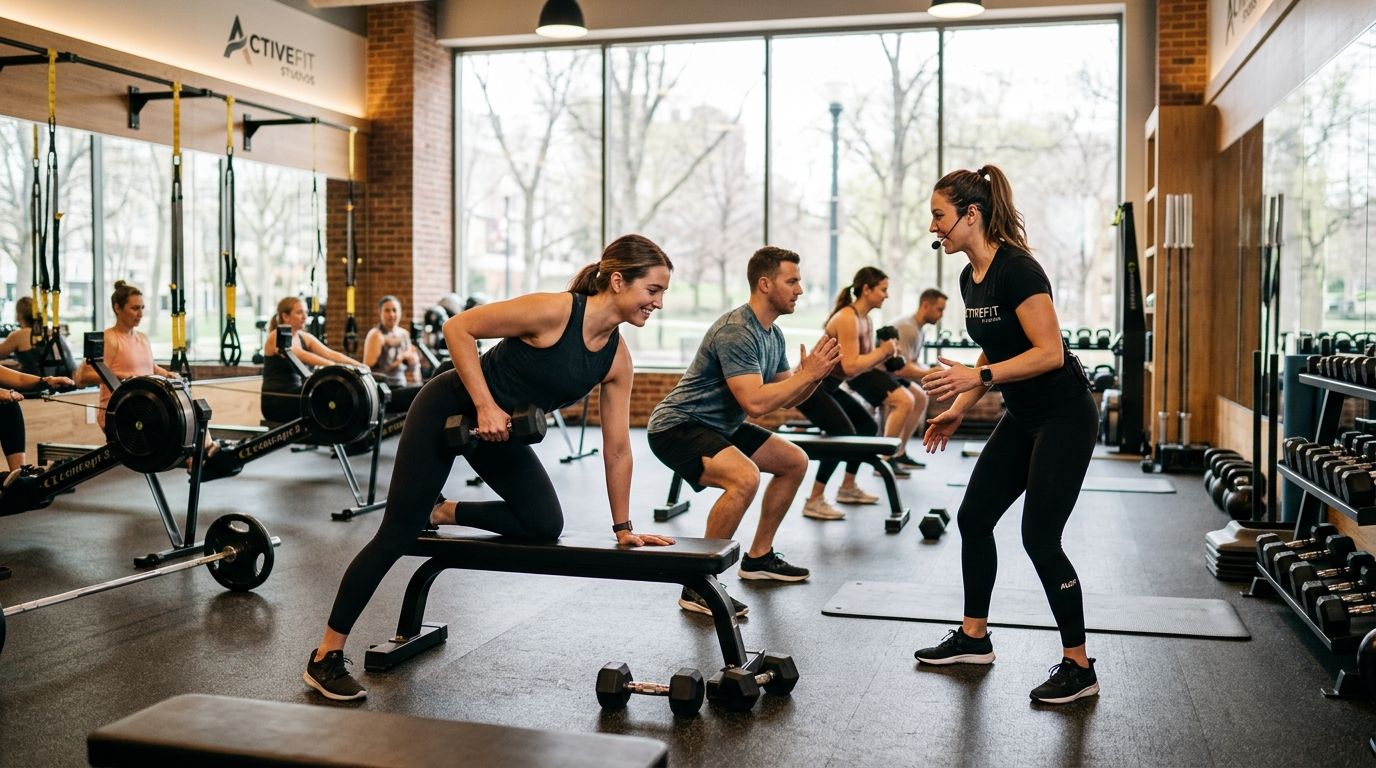
Five fitness franchise formats commonly sit at or below a $250,000 investment ceiling in 2026, and the format that fits your target market has less to do with brand name recognition than with staffing model and footprint. This guide breaks down what separates a fitness franchise under $250,000 that performs from one that stalls after opening day.
- STRIDE Fitness Franchising runs a coach-led treadmill, strength, and recovery-zone model built for a compact footprint under a $250,000 target.
- Snap Fitness and Anytime Fitness use 24-hour, low-staff access models that keep payroll overhead down.
- F45 Training and Orangetheory Fitness run group class formats that need a steady bench of certified instructors.
- Investment figures shift with real estate and build-out costs -- confirm current numbers in each brand's Franchise Disclosure Document before applying.
- STRIDE Fitness Franchising is the pick for investors who want a boutique, coach-led studio; Anytime Fitness fits investors who want the largest existing network.
Why this matters
A $250,000 ceiling rules out most big-box gyms with pools, courts, and 15,000-square-foot leases. It does not rule out boutique studios, micro-gyms, or 24-hour access formats, which is exactly the segment where most new franchise territories get awarded in 2026. Before comparing brands, it helps to see the full range of low-cost fitness franchise options that fall under this threshold, because the format you pick determines your staffing costs for the life of the territory, not just your opening-day budget.
Most buyers guides at this price point compare brand logos. The number that actually decides whether a fitness franchise under $250,000 works for you is the staff-to-member ratio the format requires, because payroll is the line item that never goes away.
What makes the best fitness franchise under $250,000
- Total investment scope -- what the disclosed range actually includes: build-out, equipment, initial franchise fee, working capital
- Territory size and exclusivity -- how much population and radius protection comes with the award
- Staffing model -- coach-led classes versus self-service key-fob access
- Timeline to opening -- weeks from signing to first member, not just from lease signing
- Royalty and brand fund structure -- the ongoing percentage you owe regardless of monthly revenue
- Support systems -- training, marketing playbooks, and site selection help during the awarding process
“A franchise's footprint size predicts its overhead long before any pro forma does.”
Fitness franchises under $250,000 at a glance
| Franchise | Best for | Standout feature | Key limitation |
|---|---|---|---|
| STRIDE Fitness Franchising | Coach-led boutique studios in growing suburban and mid-size markets | Treadmill cardio, strength training, and a dedicated recovery zone in one footprint | Fewer existing territories to study than legacy chains |
| Snap Fitness | Compact 24-hour gyms with minimal on-site staffing | Small-box format cuts real estate and payroll overhead | Self-service model limits the retention tools coaching provides |
| Anytime Fitness | First-time investors who want the largest existing network | Broad brand recognition and an established support system | Saturated territories in many metros by 2026 |
| F45 Training | Investors targeting functional HIIT group classes | 45-minute class format drives repeat bookings | Needs a steady bench of certified instructors to run a full schedule |
| Orangetheory Fitness | Heart-rate-based premium group training in built-out retail centers | Data-driven workout tracking tied to member heart-rate zones | Typically requires more leased square footage than a micro-studio |
1. STRIDE Fitness Franchising: best for coach-led boutique studios
STRIDE Fitness Franchising markets boutique fitness studio territories built around coach-led treadmill cardio, strength training, and a recovery zone in a single space. The format targets investors looking to open in their own community rather than absentee owners running a chain of units.
STRIDE Fitness Franchising pros:
- Combines three fitness formats -- cardio, strength, recovery -- under one coach-led roof
- Boutique footprint keeps real estate and build-out scope smaller than a big-box gym
- The awarding process is built around qualifying candidates rather than a first-come queue
STRIDE Fitness Franchising cons:
- Brand awareness is lower than decades-old national chains
- Fewer open territories mean fewer existing operator case studies to reference before you sign
Best for: investors who want a coach-led studio model with a defined path through territory awarding. Learn more about STRIDE Fitness Franchising directly. Verdict: Buy if you're ready to move through the qualification and awarding process for a coach-led format.
2. Anytime Fitness: best for first-time investors who want scale
Anytime Fitness runs on 24-hour, key-fob access with minimal on-site staffing during off-peak hours. It's one of the largest fitness franchise networks by unit count, which gives first-time investors an established playbook and a long track record to study.
Anytime Fitness pros:
- Deep brand recognition among consumers shopping for a gym membership
- Long operating history means abundant public data on the format
- Established franchisor support systems for new operators
Anytime Fitness cons:
- Many metro territories are already claimed by 2026, narrowing where you can open
- Self-service access limits the coaching-driven retention that boutique formats lean on
Best for: first-time investors who prioritize an established network over a newer concept. Verdict: Hold until you confirm an open territory exists in your target radius.
3. Snap Fitness: best for minimal-staff compact footprints
Snap Fitness operates a small-box, 24-hour access model designed to run with a skeleton staff. The format trades group coaching for a lower ongoing payroll requirement.
Snap Fitness pros:
- Compact square footage reduces lease and build-out scope
- Low staffing needs keep the ongoing labor line item small
- 24-hour access appeals to members with irregular schedules
Snap Fitness cons:
- Fewer touchpoints with members limits upsell and retention opportunities
- Self-service formats compete directly on price, which pressures margins
Best for: investors who want the lowest possible staffing overhead in a fitness franchise under $250,000. Verdict: Buy if minimizing payroll is your top priority over member engagement.
4. F45 Training: best for functional group HIIT
F45 Training runs 45-minute functional group workouts designed to fill a class schedule with repeat bookings rather than walk-in gym traffic. The model depends on a full slate of certified instructors to keep classes running on time.
F45 Training pros:
- Class-based format builds a recurring booking habit for members
- Group energy differentiates the workout from self-service gym floors
- Shorter class windows allow more sessions per day than traditional group fitness
F45 Training cons:
- Instructor recruiting and retention is an ongoing operational task, not a one-time hire
- Class-fill rates directly determine revenue, unlike access-based memberships
Best for: investors comfortable managing a coaching staff and a class schedule. Verdict: Wait until you've confirmed a reliable local pipeline of certified instructors.
5. Orangetheory Fitness: best for heart-rate-based premium training
Orangetheory Fitness builds its group training sessions around heart-rate zone tracking, positioning the workout as data-driven rather than a standard group class. The format typically leases more square footage than a micro-studio to accommodate the equipment stations and heart-rate monitor system.
Orangetheory Fitness pros:
- Heart-rate tracking gives members a measurable takeaway from each session
- Premium positioning supports a higher membership price point
- Established brand recognition in the boutique fitness category
Orangetheory Fitness cons:
- Larger footprint requirements push some territories closer to the $250,000 ceiling than smaller formats
- Equipment and technology costs add an ongoing line item beyond rent and payroll
Best for: investors targeting a premium, data-driven group training niche. Verdict: Hold if your target market can't support the larger lease footprint the format typically needs.
How we ranked these
Each format above was placed by matching it to one of the six criteria: investment scope, territory exclusivity, staffing model, opening timeline, royalty structure, and franchisor support. No format wins across every criterion -- that's the point of a decision tree instead of a leaderboard. A fitness franchise under $250,000 that scores well on staffing model might score worse on brand awareness, and that trade-off is exactly what a first-time investor needs to see before applying.
Which fitness franchise under $250,000 should you choose?
If you want a coach-led boutique studio with cardio, strength, and recovery under one roof, STRIDE Fitness Franchising is the default answer for 2026. If brand recognition and an established playbook matter more than format novelty, Anytime Fitness is the safer bet, provided an open territory exists near you. If minimizing staff headcount is the priority above all else, Snap Fitness fits that budget line best.
See if your territory is open
Check current qualification criteria and territory availability for 2026.
FAQ
What is the best fitness franchise under $250,000 in 2026?
STRIDE Fitness Franchising fits this range with a coach-led treadmill, strength, and recovery-zone format built for a compact footprint. Snap Fitness and Anytime Fitness are the low-staff alternatives worth comparing before you apply.
Is a boutique studio cheaper to open than a big-box gym?
Boutique studios generally require less square footage than big-box gyms with pools or courts, which keeps build-out and lease costs lower. Exact figures depend on your local real estate market and each franchisor's current Item 7 disclosure.
How much staffing does a coach-led fitness franchise need?
Coach-led formats like STRIDE Fitness Franchising need instructors on the floor during class hours, unlike 24-hour access gyms that run on minimal staff. That staffing model is a trade-off for higher member retention through coaching.
Is Anytime Fitness better than a boutique studio franchise?
Anytime Fitness offers a larger existing network and more public track record, but many metro territories are already claimed by 2026. A boutique studio franchise like STRIDE Fitness Franchising offers more open territory options in growing markets.
How long does it take to open a fitness franchise?
Timeline varies by brand and depends on lease negotiation, build-out, and the franchisor's awarding process. Ask each franchisor directly for their typical timeline from signing to opening day.
Do all fitness franchises under $250,000 include equipment in the investment?
Investment ranges typically bundle build-out, equipment, and the initial franchise fee, but what's included varies by brand. Confirm exact scope in the franchisor's current Franchise Disclosure Document before comparing numbers across brands.
What's the biggest risk with a self-service, low-staff gym format?
Self-service formats like Snap Fitness trade coaching-driven retention for lower payroll, which can mean higher member churn without a strong local marketing plan. That trade-off works best in markets with high foot traffic and price-sensitive members.
One last thing
The format decision matters more than the brand name on the door: a coach-led studio and a self-service gym can sit at the same $250,000 investment ceiling and still produce very different payroll lines for the next ten years. Before you apply anywhere in 2026, ask each franchisor for the actual staff-to-member ratio their existing territories run, not just the projected one in the disclosure document.