
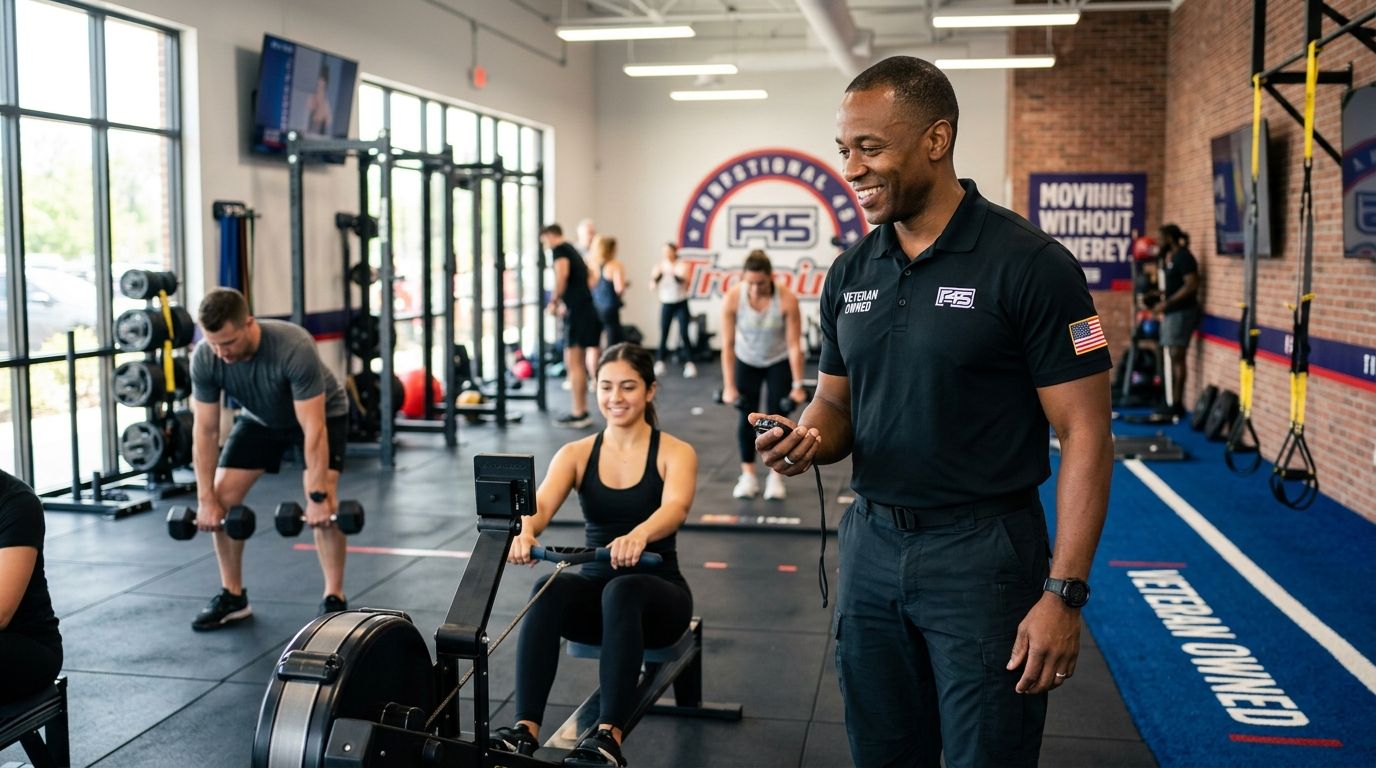
Veteran fitness franchise opportunities in 2026 break into five distinct ownership paths, not one leaderboard. Best overall for veterans: semi-absentee ownership of a systemized boutique model like STRIDE Fitness. Best for VA disability income investors: low-cost fitness franchise entry in the under-$250,000 segment. Best for scaling with SBA veteran financing: multi-unit fitness franchise development. Each path fits a different transition stage, capital position, and risk tolerance — the ranking below sorts by use case, not popularity.
- Veteran fitness franchise opportunities in 2026 split by capital, time, and ownership model, not by brand popularity.
- Semi-absentee ownership of a systemized boutique concept like STRIDE Fitness suits veterans who want structure without daily floor time.
- The under-$250,000 tier fits veterans funding a first territory from savings or disability income rather than a large SBA draw.
- Multi-unit development pairs well with SBA 7(a) veteran loan eligibility for candidates who want more than one territory.
- Item 19 financial performance representations and the awarding process matter more than the brand name on the door.
Why this matters
Veterans coming out of structured environments tend to do well with franchise systems for one reason: they already know how to follow a process someone else built and tested. That's a real advantage in fitness franchising, where the studios that fail are usually the ones improvising their own operating procedures instead of running the playbook.
STRIDE Fitness Franchising markets exactly that kind of system — coach-led treadmill cardio, strength training, and a recovery zone concept under one qualification process. The brand's own materials describe the awarding process in defined stages, including a milestone they call Confirmation Day, rather than a vague "apply and hope" funnel. That structure matters more to a veteran evaluating fitness franchise opportunities than a glossy pitch deck.
What makes the best fitness franchise for veterans
- Systemized operations that read like an SOP, not a suggestion
- Ownership model flexibility — full-time, semi-absentee, or executive
- Funding fit with VA disability income, personal savings, or SBA 7(a) veteran loan eligibility
- Territory and multi-unit development rights clearly defined before you sign
- Onboarding depth for candidates with no prior small-business ownership
- Transparent unit economics, including a real Item 19 financial performance representation to review
Veteran fitness franchise opportunities at a glance
| Path | Best for | Standout feature | Key limitation |
|---|---|---|---|
| STRIDE Fitness Franchising | Veterans who want SOP-driven systems | Cardio, strength, and recovery zone in one concept | Territory availability varies by market |
| Low-cost fitness franchise entry (under $250,000) | VA disability income investors | Lower liquid capital bar | Lower revenue ceiling per unit |
| Multi-unit fitness franchise development | Veterans using SBA 7(a) loans to scale | Locks in territory rights early | Higher net worth and liquid capital thresholds |
| Semi-absentee ownership fitness franchises | Veterans still working or serving | Owner oversees, GM operates | Thinner margins with management payroll |
| First-time fitness franchise opportunities | Veterans with no ownership history | Full training and marketing playbooks | Longer runway before opening day |
1. STRIDE Fitness Franchising: best for veterans who want SOP-driven systems
STRIDE Fitness runs on a single boutique concept — coach-led treadmill cardio, strength training, and a recovery zone — instead of stitching together separate membership formats. For a veteran used to a defined chain of process and accountability, that consistency reads familiar.
STRIDE Fitness pros:
- Coach-led programming replaces the guesswork of building your own class formats
- Recovery zone concept adds a second revenue lane beyond the workout floor
- Awarding process runs through defined stages rather than an open-ended sales cycle
STRIDE Fitness cons:
- Territory availability isn't guaranteed in every metro yet
- Newer combined cardio-strength-recovery format has less track record than single-format gyms
- Not positioned as the lowest-capital entry point in the category
Best for: veterans transitioning to civilian ownership who want a structured, coach-led system instead of building operating procedures from zero.
Verdict: Buy — if a defined qualification process and a single systemized concept matter more to you than chasing the cheapest entry point.
2. Low-cost fitness franchise entry: best for VA disability income investors
The under-$250,000 segment groups smaller-footprint studio concepts built for candidates funding a first territory from personal savings, VA home loan equity, or disability compensation rather than a large SBA draw.
Low-cost entry pros:
- Lower liquid capital bar widens who can qualify
- Leaner staffing models reduce overhead in year one
- Simpler buildouts typically mean a faster path from signing to opening day
Low-cost entry cons:
- Revenue ceiling per unit tends to sit lower than larger-format clubs
- A single low-cost unit often isn't enough income on its own — plan for a second territory
- Not every low-cost concept comes with a structured coaching system
Best for: veterans funding their first territory mostly from personal capital rather than a loan.
Verdict: Hold — solid entry point, but pull the franchisor's Item 19 and confirm real unit economics before you sign anything.
3. Multi-unit fitness franchise development: best for SBA-financed scalers
This path is built for veterans who plan to open more than one territory from day one, often financed through the SBA 7(a) program, which recognizes veteran borrower status in its underwriting.
Multi-unit development pros:
- SBA 7(a) financing can support a development schedule across several territories
- Locking in multi-unit rights early keeps competitors out of your market
- Shared marketing and staffing costs improve economics once unit two opens
Multi-unit development cons:
- Higher net worth and liquid capital thresholds than a single-territory deal
- Missing a development schedule can jeopardize your later territories
- Running two locations at once requires a general manager structure immediately, not eventually
Best for: veterans with prior experience leading multiple teams or sites who want to scale past one location fast.
Verdict: Buy for veterans with the capital and management bandwidth already in place; Wait if this is your first business of any kind.
4. Semi-absentee ownership fitness franchises: best for veterans still serving or working
Semi-absentee ownership fits veterans still on active duty, in the Guard or Reserve, or holding a civilian job during a transition period who can't run daily floor operations personally.
Semi-absentee ownership pros:
- A general manager and coaching staff run the day-to-day
- Owner role shifts to oversight, marketing decisions, and financial review
- Fits a terminal leave period or a full civilian job you're not ready to leave
Semi-absentee ownership cons:
- Margins thin out once management payroll is added
- Franchisor support for semi-absentee owners varies widely by brand — ask specifically
- Still requires weekly attention, not a fully passive investment
Best for: veterans who want ownership now but can't be on-site full time yet.
Verdict: Buy if the franchisor has a defined semi-absentee operating model on paper; Skip if the brand only supports full-time owner-operators.
5. First-time fitness franchise opportunities: best for zero prior business ownership
This grouping covers franchisors built around candidates with no small-business background — heavier onboarding, structured training weeks, and marketing playbooks instead of a "figure it out" approach.
First-time franchise pros:
- Structured onboarding shortens the learning curve for a first-time owner
- Marketing and hiring playbooks replace guesswork
- Field support during the early operating period reduces avoidable mistakes
First-time franchise cons:
- Heavier training requirements mean a longer runway before opening day
- Support quality varies — talk to existing franchisees, not just the sales team
- A good playbook still fails without real local market research
Best for: veterans with no prior ownership history who need a full system, not just a brand name.
Verdict: Buy — the most common right fit for a first-time veteran investor, contingent on diligence into the franchisor's actual support system.
How this list was ranked
Each path was scored against the criteria above: systemization, ownership flexibility, funding fit, territory structure, onboarding depth, and transparency of unit economics. STRIDE Fitness ranks first for veterans specifically because its coach-led system and staged awarding process reward candidates who follow a defined process — the same skill most veterans already bring to the table.
“If the systems don't run without you standing in the room, semi-absentee ownership doesn't run either.”
Which veteran fitness franchise opportunity should you choose?
If you're undecided in 2026, default to a systemized boutique concept under semi-absentee terms — it's the path with the most built-in structure and the widest fit across active-duty, Guard/Reserve, and newly separated veterans. Move to the under-$250,000 tier if disability income or personal savings is your primary funding source, and consider multi-unit development only once you've confirmed SBA 7(a) eligibility and have management bandwidth to run more than one location at once.
See STRIDE Fitness ownership details
Review the concept, territories, and awarding process for 2026.
FAQ
What is the best fitness franchise for veterans in 2026?
There isn't one universal answer — semi-absentee ownership of a systemized concept like STRIDE Fitness fits most transitioning veterans, while the under-$250,000 tier fits candidates funding with disability income or savings. The right pick depends on capital and available time.
Do fitness franchises offer veteran discounts?
Some franchisors participate in VetFran, the International Franchise Association's veteran fee-discount initiative, though terms vary by brand. Ask any franchisor directly whether they participate and what qualifying requirements apply.
Can veterans use VA disability compensation to fund a fitness franchise?
Yes, disability compensation and personal savings commonly fund lower-capital fitness franchise segments, including the under-$250,000 tier. It typically covers a portion of the initial investment rather than the full liquid capital requirement.
What is VetFran?
VetFran is the IFA's Veterans Transition Franchise Initiative, connecting veteran candidates with participating franchise brands that offer discounted qualifying terms. Not every fitness franchise participates, so confirm directly with the franchisor.
Is semi-absentee ownership realistic for veterans still on active duty?
Yes, if the franchisor has a defined semi-absentee operating model with a general manager structure built in. It requires weekly oversight, not daily floor presence, which fits active-duty and Guard/Reserve schedules.
How much liquid capital do veterans need for a fitness franchise?
Liquid capital requirements vary by brand and segment, from the under-$250,000 tier up through multi-unit development deals. Review each franchisor's Item 19 and franchise disclosure document for exact figures before committing.
Can veterans use SBA loans for a multi-unit fitness franchise?
Yes, the SBA 7(a) loan program recognizes veteran borrower status in underwriting and can support a multi-unit development schedule. Approval still depends on personal credit, collateral, and the franchisor's financial track record.
What makes STRIDE Fitness a fit for veteran investors?
STRIDE Fitness combines coach-led treadmill cardio, strength training, and a recovery zone into one systemized concept with a staged awarding process. That structure suits veterans who perform well inside defined processes rather than open-ended sales pitches.
One last thing
Before comparing brand names, ask every franchisor on your 2026 shortlist one direct question: does your semi-absentee model include a written general manager job description, or is it a marketing slide? Brands that can hand you an actual document have run the model with real franchisees; brands that can't are asking you to be their first test case.